In the ever-expanding digital landscape of 2026, translating the raw, untamed essence of a character like Wolverine from comic book pages to interactive experiences remains one of gaming's most fascinating challenges. The core appeal—a perfect storm of unbreakable adamantium, a healing factor that defies death, and a berserker rage simmering beneath a gruff exterior—is deceptively simple to list but notoriously difficult to embody. Yet, across various genres and eras, developers have managed to craft virtual versions of Logan that let players not just control him, but truly feel the weight of his claws and the rhythm of his relentless, regenerative heartbeat. These experiences range from bloody, cinematic odysseys to lighthearted family adventures and deep tactical simulations, each finding a different angle to showcase why the man called Wolverine endures.
🎮 The Unchallenged Benchmark: X-Men Origins: Wolverine
Even in 2026, this title stands as the definitive power fantasy for the character. It didn't just simulate combat; it built an entire gameplay ecosystem around Logan's biology. The health regeneration wasn't a passive bar refilling off-screen—it was a visual spectacle of muscle and skin knitting itself back together in real-time, turning near-death moments into triumphant comebacks. The combat was a symphony of visceral feedback: bone-crunching sound design, dismemberment physics, and finishers that felt less like canned animations and more like raw, cathartic releases of animalistic fury. Playing it was like being handed a living, breathing chainsaw and set loose in a world of tissue paper enemies. Its legacy is that of a perfectly tuned instrument, one that so accurately captured the sensation of being an unstoppable force that it has become the standard against which all other Wolverine games are measured.
🧱 Family-Friendly Ferocity: LEGO Marvel Super Heroes 2
This game proved that Wolverine's core identity could survive—and even thrive—outside of an M-rated, blood-soaked context. Stripping away the gore but keeping the essence, it presented Logan as a grumpy, indestructible pocket tank. His healing factor translated into a constant, reassuring presence on the battlefield, allowing younger players to experiment with a reckless, in-your-face style without constant fear of a game over screen. The charm came from the contrast: the signature LEGO humor softening his edges, while his animations—a constant blur of claw-swipes and gruff head-shakes—maintained that iconic feral posture. It was Wolverine distilled into his most archetypal, approachable form: the ultimate survivor, repackaged with a wink and a smile.
♟️ The Tactical Berserker: Marvel's Midnight Suns
Here, Wolverine's chaos was channeled into order. The turn-based strategy format forced a fascinating dichotomy: how do you make a planning phase feel visceral for a character who operates on pure instinct? The answer was a brilliant suite of mechanics. His Rage resource acted like a pressure cooker, building with each attack and unlocking devastating, area-clearing finishers that felt like strategic detonations. His healing wasn't just sustainability; it was a positional tool, allowing him to hold key choke points like an immovable object. Beyond combat, the game delved into the man behind the mutation, exploring Logan's introspection and vulnerabilities around the Abbey. This version of Wolverine was less a wild beast and more a battle-hardened tactician who happened to have claws, proving his depth could support narrative weight and complex gameplay systems.
⚔️ The Ensemble Brawler: Marvel Ultimate Alliance 3 & Marvel vs. Capcom 3
These titles showcase Wolverine as the ultimate team player and solo duelist, respectively.
-
In Marvel Ultimate Alliance 3, he is the spearhead of any assault. His playstyle is a masterclass in aggressive momentum: fast, multi-hit claw combos that shred enemy stagger meters, coupled with a healing factor that encourages constant engagement. He doesn't wait for openings; he creates them through sheer, relentless pressure. Playing him in a team of four feels like unleashing a controlled blast furnace into a fight, his presence amplifying the chaos around him.
-
In Marvel vs. Capcom 3, Wolverine is pure, distilled velocity. He is less a character and more a philosophy of offensive play, a blur of cross-screen lunges (Berserker Slash) and rapid, inescapable combo strings. Mastering him is like learning to conduct lightning; it's about controlling an inherently wild and destructive force with precision. He rewards aggressive reads and constant pressure, making every match a high-stakes test of reflexes where his healing factor is traded for unmatched offensive potential.
🕵️ The Forgotten Hybrid: X2: Wolverine's Revenge
A cult classic that, in 2026, feels remarkably prescient in its design. It presented a Wolverine who couldn't always bulldoze through problems. The game wove together stealth sequences and brutal melee combat, mirroring Logan's own struggle between animalistic impulse and hunter's patience. The Rage meter was a brilliant risk-reward system: building it through combat or taking damage, then unleashing it for temporary, screen-clearing invincibility. It cast Wolverine not just as a brawler, but as a predator in a concrete jungle, using his senses to track foes and choosing when to strike from the shadows or erupt into a whirlwind of claws. Its atmospheric, moody story delved into his psyche in a way few games have attempted since.
🔫 The Modern Teamfighter: Marvel Rivals
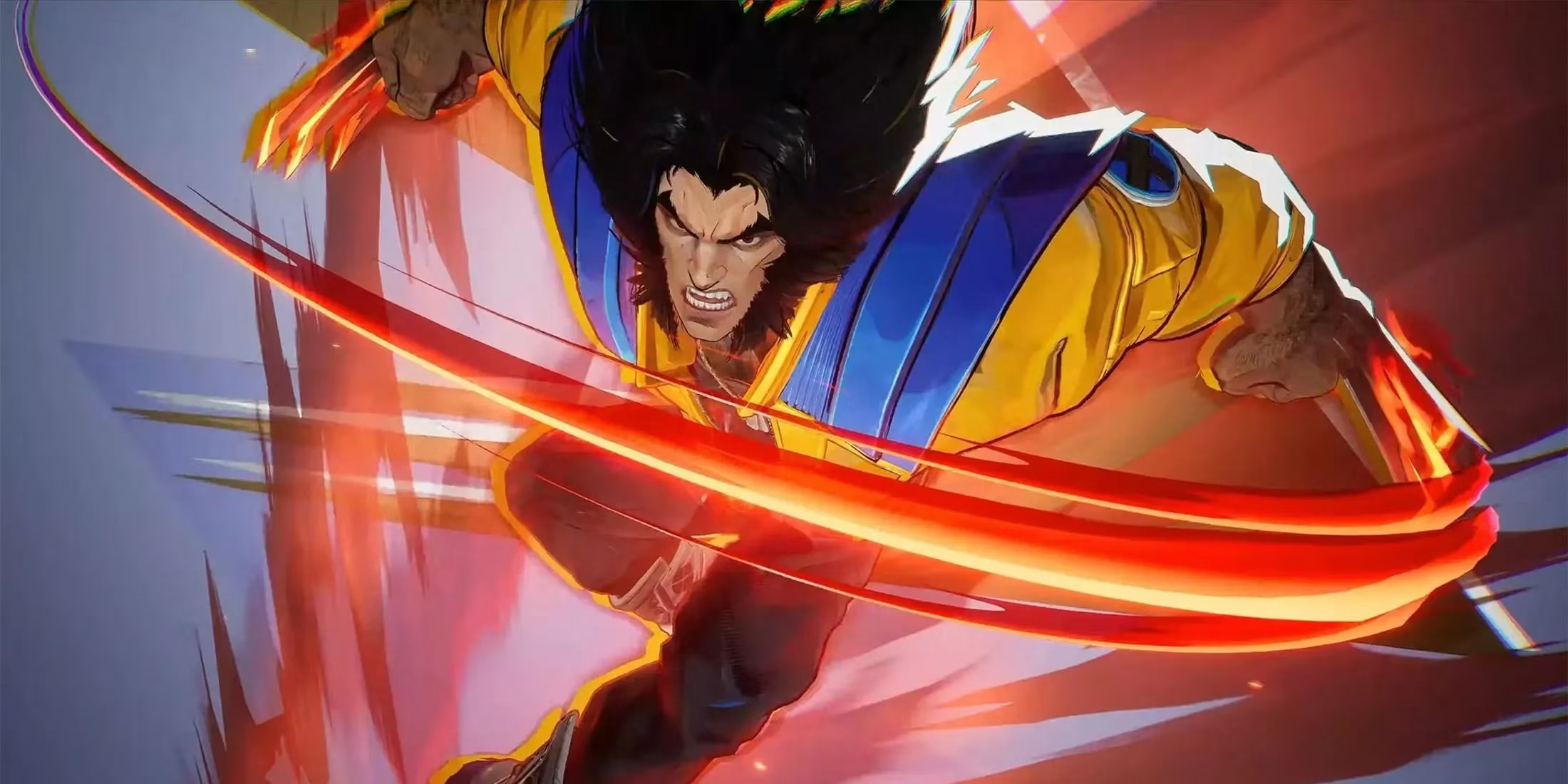
In the contemporary hero-shooter arena of 2026, Marvel Rivals faced a unique question: how do you make a guy with claws relevant in a meta dominated by projectile heroes and tactical abilities? The answer was to double down on what makes Wolverine, Wolverine: unmatched target isolation and disruptive chaos. His kit is built around the "Leap and Delete" fantasy. He functions as the team's surgical strike element, using his mobility to bypass frontlines, latch onto a vulnerable support or damage dealer, and eliminate them in a flurry of blades before the enemy team can react. His survivability comes from a mix of damage reduction and self-healing, allowing him to commit to these dangerous dives. In the organized chaos of a 6v6 teamfight, a good Wolverine player is like a rogue wave in a sea of gunfire—unpredictable, devastating, and capable of shifting the tide of battle in an instant. He embodies the pure, high-risk/high-reward joy of playing a character who thrives in the heart of the madness.
📊 Wolverine Across the Genres: A Comparative Claw-Swipe
| Game Title | Core Genre | How It Captures Wolverine | Playstyle Vibe |
|---|---|---|---|
| X-Men Origins: Wolverine | Action-Adventure | Visceral health regen, brutal finishers, raw power fantasy | Unstoppable Juggernaut 🦾 |
| LEGO Marvel Super Heroes 2 | Action-Platformer | Approachable ferocity, resilient brawler, charming gruffness | Grumpy Pocket Tank 😠 |
| Marvel's Midnight Suns | Tactical RPG | Rage resource management, strategic berserker, deep narrative | Tactical Pressure Valve ⚙️ |
| Marvel Ultimate Alliance 3 | Action RPG / Brawler | Frontline assault, combo-focused aggression, team dynamo | Spearhead Brawler ⚔️ |
| Marvel vs. Capcom 3 | Fighting Game | High-speed mix-ups, offensive pressure, combo velocity | Lightning in a Bottle ⚡ |
| X2: Wolverine's Revenge | Action-Stealth | Predatory stealth, rage-fueled bursts, atmospheric struggle | Concrete Jungle Predator 🐺 |
| Marvel Rivals | Hero Shooter | Target isolation, dive-centric disruption, teamfight chaos | Surgical Strike Chaos Agent 🔪 |
Ultimately, the best Wolverine games understand that he is more than a set of powers. He is a feeling. It's the feeling of momentum that cannot be stopped, of wounds that close as fast as they open, and of a rage that is both a curse and a weapon. Whether he's navigating the dark corridors of a forgotten facility, trading blows with gods in a fighting game arena, or coordinating dives in a competitive shooter, the successful virtual Logan makes the player feel like a self-sharpening blade—constantly in motion, constantly enduring, and eternally sharp. As gaming technology continues to evolve towards 2030, one can only imagine how much more vividly that primal, regenerative heartbeat will thrum through our controllers.