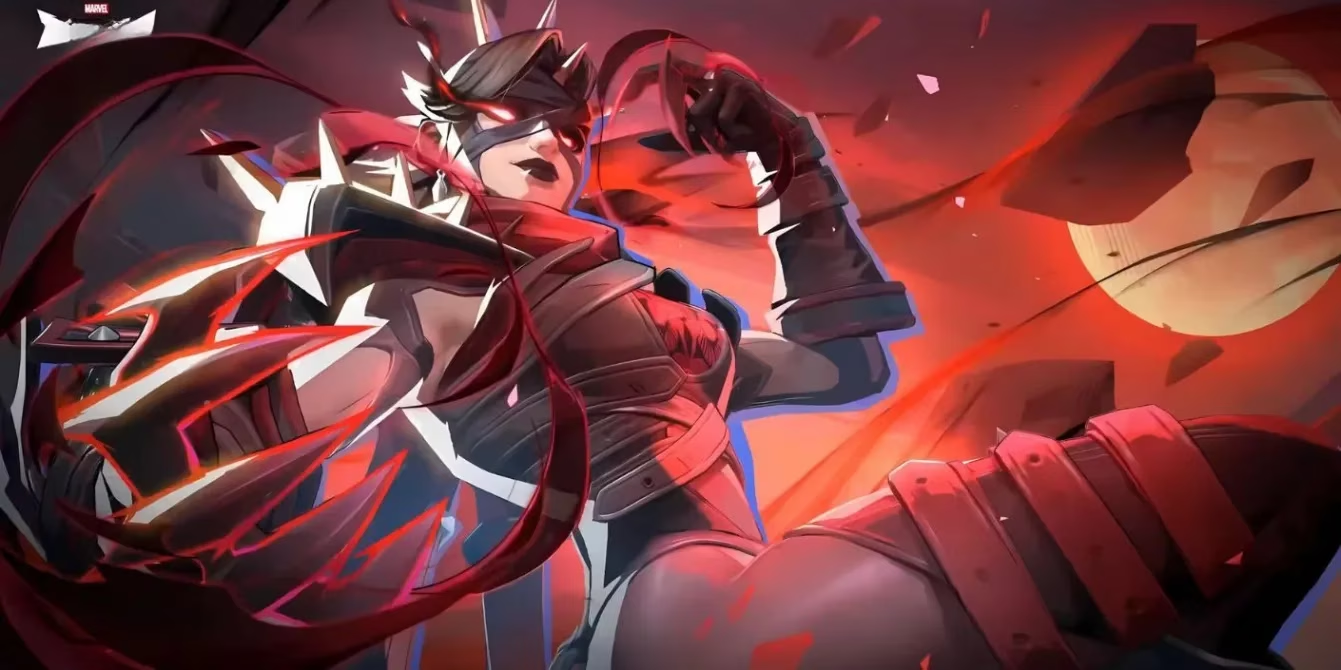
The community of Marvel Rivals has been grappling with a significant phenomenon known as the 'Strategist Strike.' Players have been increasingly reluctant to select characters from the supportive Strategist archetype, largely due to frustrations with their perceived limitations and repetitive gameplay loop. This discontent stems from the current 'dive' meta, where highly mobile, aggressive heroes like Captain America and Magik excel at targeting and eliminating backline supporters. Many Strategists, designed with a primary focus on healing and utility, find themselves vulnerable and lacking the tools to secure eliminations or escape these relentless assaults independently. This has created a team composition imbalance, often leaving squads without crucial support. However, the impending arrival of a new character rumored for Season 2.5 might hold the key to resolving this widespread grievance and reinvigorating the role.
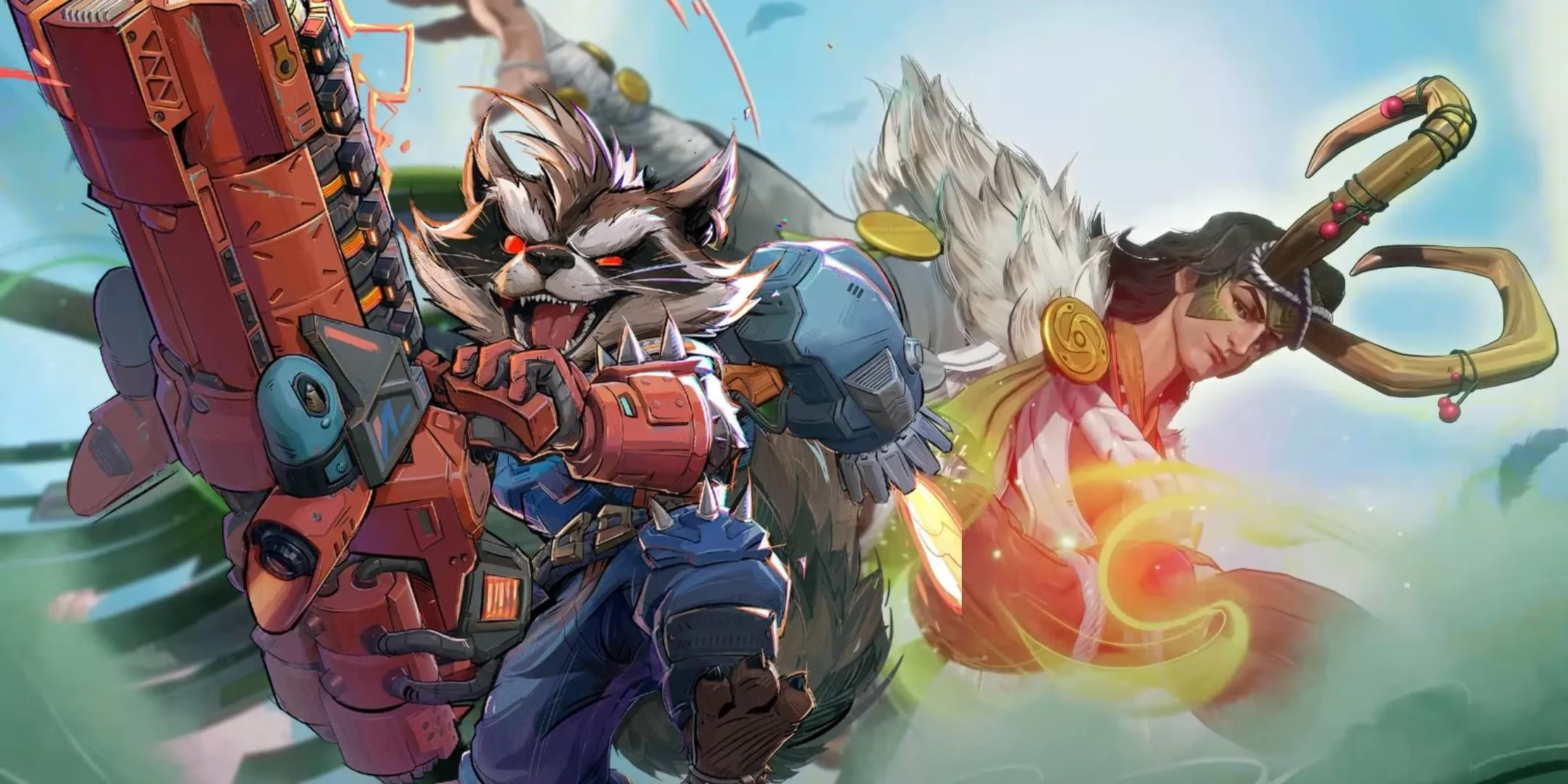
The core of the Strategist dilemma lies in their design philosophy. Unlike their Duelist counterparts, many Strategist heroes possess limited mobility or offensive capabilities. Their kits are heavily geared toward healing and team support, offering little in the way of personal dueling power or escape mechanisms. Characters like Luna Snow or Mantis, while excellent at sustaining their teams, often feel passive and reactive. Their ultimate abilities, frequently large area-of-effect healing fields, can prolong fights but may not provide the engaging, proactive gameplay that many players seek. This homogenization has led to a sense of predictability and, for some, boredom within the role.
Ultron Might Revolutionize the Strategist Archetype
All eyes are now on Ultron, the ruthless artificial intelligence and Avengers-level villain slated for release. Leaks and rumors suggest he will be classified as a Strategist, but with a twist that could shatter the existing mold. Reports indicate that Ultron may boast high mobility and aggressive tools, a stark contrast to the traditional backline healer. Given his comic book and cinematic portrayals, where he commands legions and flies with menacing grace, it is highly plausible that Marvel Rivals will grant him freely controlled flight, similar to Iron Man or The Human Torch. This alone would fundamentally alter how a Strategist navigates the battlefield.
More importantly, speculation suggests that Ultron could trade raw healing potency for significant damage output. Imagine a Strategist whose primary role isn't just to mend wounds but to actively punish those who dare to target him. Ultron could be the one Strategist whose healing is much lower than his peers, but whose offensive power creates a unique equilibrium. This design would grant him a distinctive niche: a high-damage, mobile Strategist who can hold his own in solo engagements while still providing auxiliary support. Instead of being a passive heal-bot, Ultron could dart around conflicts, applying pressure and countering dives directly.
Countering the Dive Meta with Damage

This potential kit makes Ultron a theoretical perfect counter to the prevailing dive meta. Dive compositions rely on swiftly eliminating vulnerable supports to cripple a team's sustainability. Currently, very few Strategists have reliable tools for escaping aggressive characters, especially when focused by multiple attackers. Loki has teleportation tricks, but they are on cooldowns and can be countered. A damage-focused Strategist like Ultron changes this dynamic entirely. A Strategist with an above-average damage output from the beginning will have the means to repel characters who try to hunt them down. The threat of substantial retaliation forces dive heroes like Spider-Man or Iron Fist to second-guess their assaults, adding a layer of strategic depth to engagements.
Having at least one Strategist in the game whose damage output can repel 'dive' characters will change how teams approach large-scale fights. It encourages more cautious and calculated team compositions, moving away from pure, unbridled aggression. The presence of a formidable Strategist who can fight back transforms them from a mere objective to a credible threat, reshaping the flow of battle and potentially making team fights more dynamic and less predictable.
Addressing Homogeneity and Player Appeal
The 'Strategist Strike' is also a symptom of role homogeneity. Many Strategists share overly similar ability templates, which can be broadly categorized as:
-
A primary fire that heals allies and mildly damages foes.
-
A crowd-control ability to impair enemy movement.
-
A potent healing skill with a lengthy cooldown.
-
An area-of-effect Ultimate that provides massive team sustain.
This repetitive design can deter players from exploring the role. With a Strategist who uses less healing, they may be more appealing to individuals who typically favor damage-oriented Duelists or tanky Vanguards. Introducing a hybrid character, similar to how Mister Fantastic operates as a Vanguard-like Duelist, adds much-needed variety. A Strategist who embodies traits of a Duelist or Vanguard—through damage, mobility, or disruptive control—would attract a broader player base and make team composition more flexible and interesting.
The Future of Strategists in Marvel Rivals
Ultron's potential arrival signals a positive direction for Marvel Rivals. It demonstrates a willingness to innovate within established roles and address community feedback directly. Whether Ultron single-handedly ends the 'Strategist Strike' or not, his concept paves the way for future heroes. With new characters promised monthly starting in Season 3, we can anticipate more Strategists who 'break the mold.' The game's longevity will be bolstered by introducing unique and compelling concepts that challenge traditional definitions, ensuring every role offers diverse and engaging playstyles. The era of the purely passive healer may be evolving into an age of versatile, multi-faceted supporters who can truly shape the outcome of a match.