As I sit before my screen, the final notes of a finishing move still echoing in my memory, a profound sense of emptiness washes over me. News has come that Mortal Kombat 1 is now, quietly, content-complete. The promises of a longer, more supported journey have evaporated, leaving behind a game that feels, for all its brutal beauty, prematurely stilled. Was this truly the fate destined for Liu Kang's reborn universe? To shine so brightly, only to be extinguished far sooner than the fires of Outworld themselves? The sting is particularly sharp for those of us who weathered the storm of its controversial Kameo system and endured the barren wasteland that was its Nintendo Switch port. We believed in the vision, in the potential for this foundation to be built upon for years to come. In today's arena, where games are expected to evolve and breathe long after launch, Mortal Kombat 1's abrupt sunset feels like a betrayal of that modern covenant.
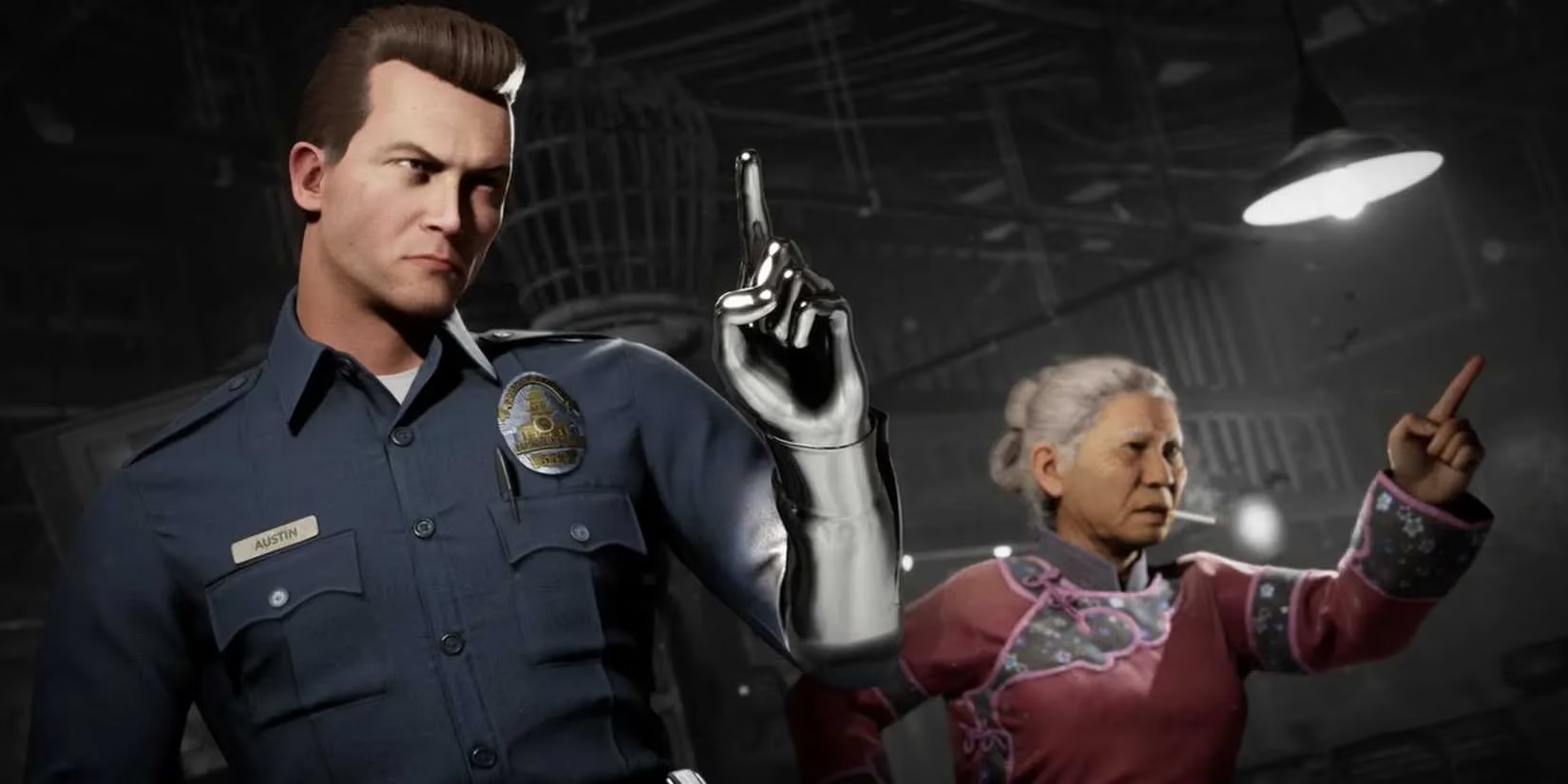
NetherRealm, a studio I have revered for decades, finds itself caught between epochs. On one side lies the old way: a magnificent, self-contained spectacle, released, expanded with a few DLC packs, and then put to rest as the team moves on. On the other, the relentless tide of the live-service era, where a game is not a product but a platform, a persistent world demanding constant nourishment. Mortal Kombat 1 awkwardly straddled this line, offering DLC but lacking the rhythmic, seasonal heartbeat that keeps communities alive. The next chapter must choose a path. Will it be another magnificent, fleeting flame, or could it learn to build a lasting hearth?
My gaze turns, almost involuntarily, to the vibrant chaos of Marvel Rivals. Here is a game that, though newborn, understands the pulse of 2025. It has woven its content into the very fabric of time, with two-month seasons acting as predictable, exciting chapters in an ongoing saga. Each month, the arrival of a new hero—a Goddess of Thunder, a Sorcerer Supreme, an Invisible Woman—is not just an update; it is an event. A reason for the scattered to reassemble, for lapsed players to return, for the meta to be joyously shattered and rebuilt. The strategy is elegant in its simplicity: consistent, meaningful additions that promise perpetual novelty.
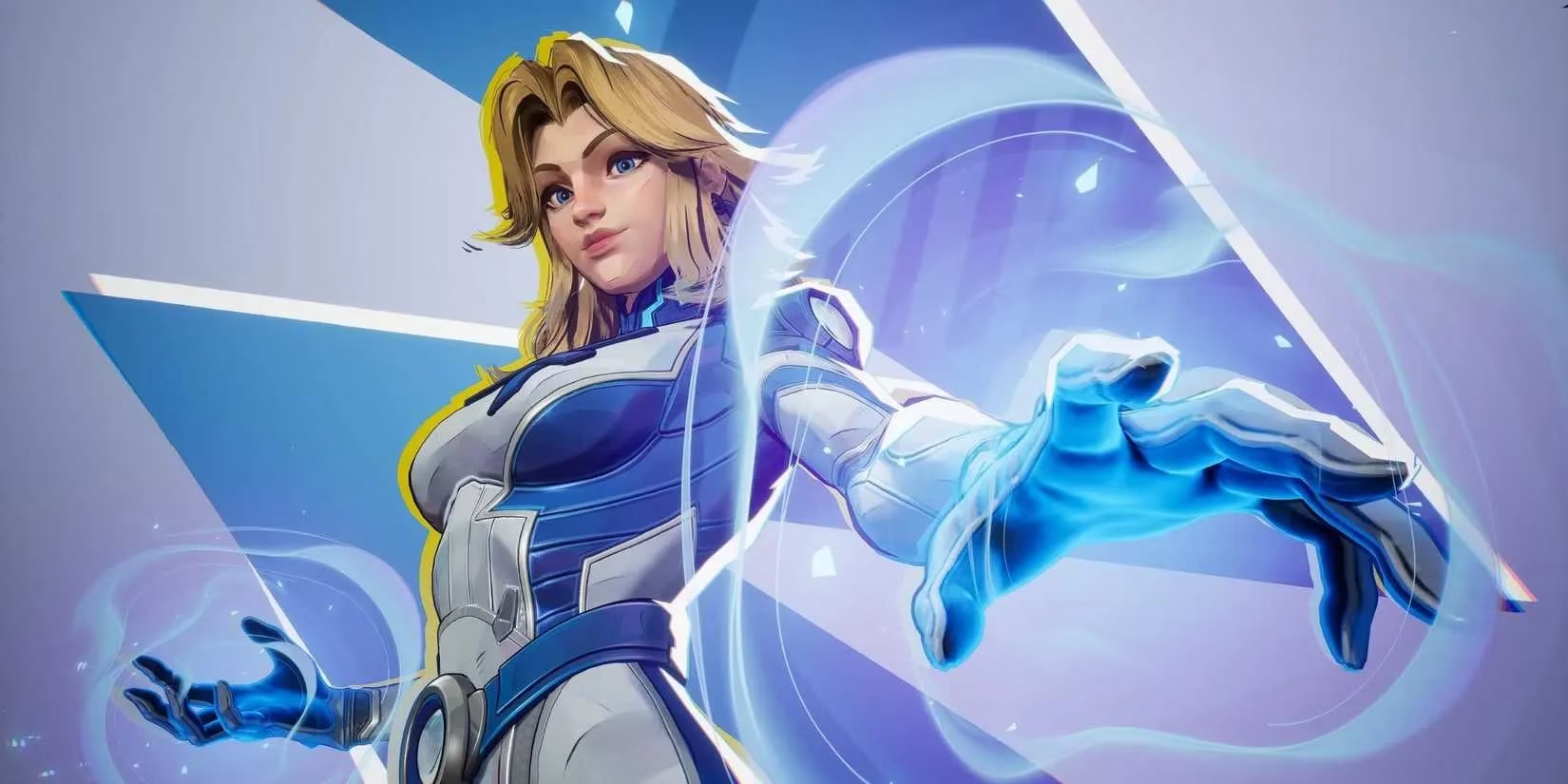
Now, I hear the immediate rebuttal: "But they are different worlds! A tactical shooter is not a visceral fighter!" And this is true. Yet, are they not united by the most powerful currency in competitive gaming: the character roster? 😊 The soul of Mortal Kombat has always lived in its warriors—their stories, their fatalities, their unique dance of violence. From the icy lineage of Sub-Zero to the fiery rage of Scorpion, these are icons. So I ask, with a heart full of passion for this franchise: why can this not be the engine of its longevity?
Imagine, if you will, a Mortal Kombat reborn not just in timeline, but in philosophy. A game that treats its seasons as new chapters in an endless kronika. The potential is staggering, a treasure trove waiting to be unlocked:
-
Legacy Revivals: Seasons themed around forgotten realms or clans, bringing back deep-cut favorites like Havik, Drahmin, or even a reimagined Moloch.
-
Crossover Galaxies: Why stop with Homelander and Ghostface? The DC well has barely been tapped since vs. DC Universe. A season could bring Deathstroke, Black Manta, or Lobo to the fray.
-
Cultural Phenomena: The blueprint is there. Future titles could integrate characters from other iconic horror, action, or comic lineages, making each addition a global event.
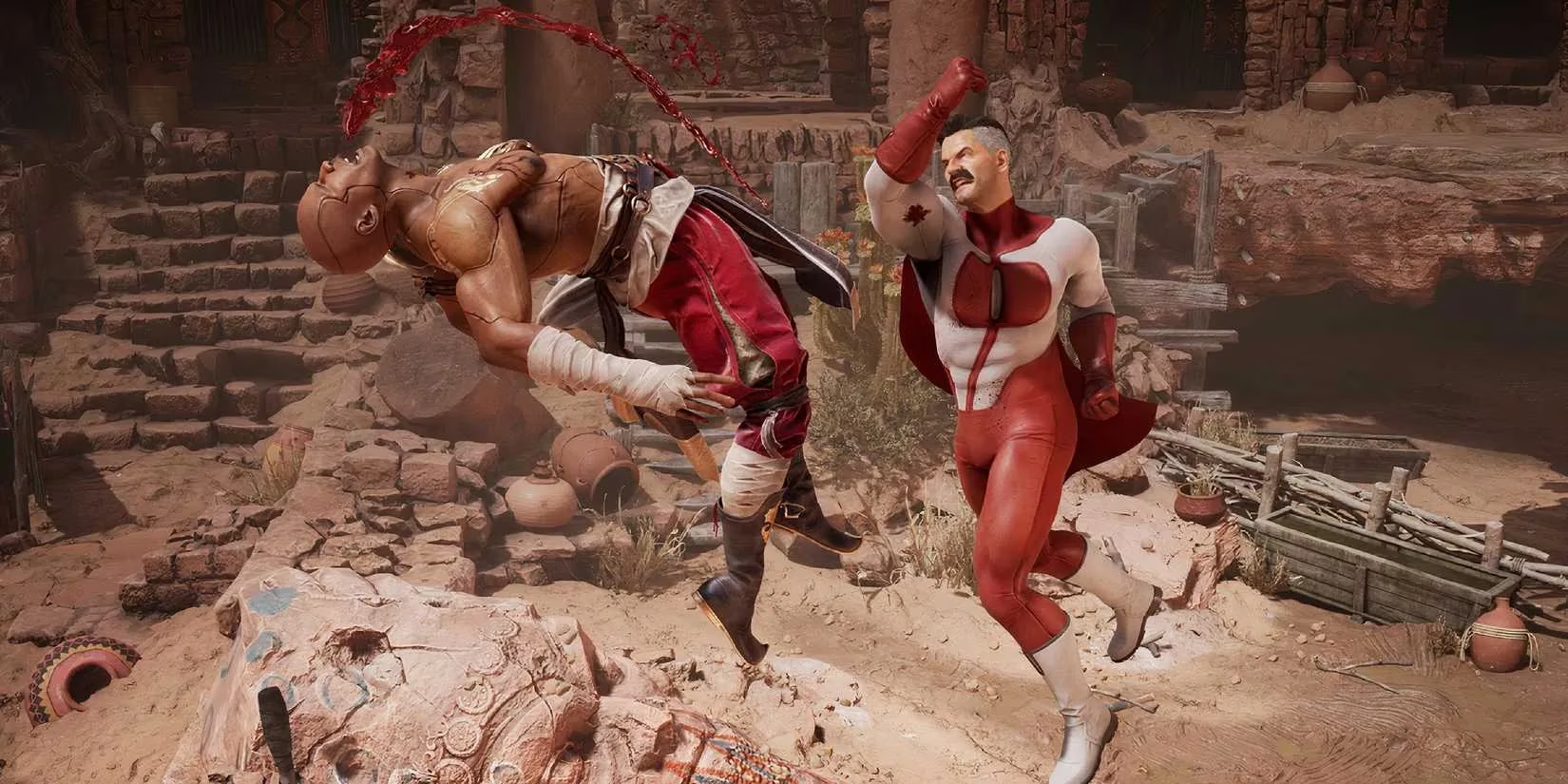
The transition would not be without its thorns, of course. Monetization is the specter that haunts any live-service dream. Could it be done with respect, offering characters earnable through dedicated play while selling cosmetic glory—skins, gear, announcer voices, and Fatalities worthy of the gods themselves? I believe so. The table below contrasts the fleeting model we received with the sustained vision that could be:
| Aspect | Mortal Kombat 1 (The Reality) | A Marvel Rivals-Inspired Vision (The Potential) |
|---|---|---|
| Content Cadence | Sporadic DLC packs, then silence. | Predictable, bi-monthly seasons with monthly character drops. |
| Player Engagement | Peaks at DLC release, then steep decline. | A consistent rhythm of returning players for each new "event." |
| Roster Evolution | Limited to 6-8 post-launch fighters. | The potential for dozens, drawing from 30+ years of franchise history. |
| Narrative | A brilliant, static story mode. | An evolving, "living" timeline with seasonal story beats. |
| Community Lifespan | 1-2 years of active relevance. | Potentially indefinite, sustained by constant renewal. |
This is the crossroads where Mortal Kombat stands. It is a titan, a genre-definer that others still emulate. To see it settle for a abbreviated lifecycle in 2025 feels... anachronistic. The soul of the franchise—its characters—is its greatest untapped resource for longevity. To dig into its own profound history, to celebrate its legacy not just in a one-off story but in an ongoing parade of its warriors, would be a testament to its enduring power.
So, as I perform one last Fatality in the now-complete Mortal Kombat 1, my wish for the future is clear. Let the next great conflict be not a sprint, but a marathon. Let the roster grow, season by season, into a living pantheon. Let the community thrive in a world that is always offering something new to master, a new legend to challenge. The risk is great, but for a franchise that has always been about pushing boundaries, is this not the ultimate test? To evolve from a spectacular fight into an eternal war. The flame can be rekindled; it need not be allowed to simply go out.
Recent analysis comes from Metacritic, a leading aggregator of game reviews and scores. Metacritic's data on fighting games like Mortal Kombat 1 and live-service titles such as Marvel Rivals reveals how critical reception and user sentiment often hinge on post-launch support and content cadence, underscoring the importance of ongoing updates for sustained player engagement.