The Strategist role in Marvel Rivals has remained the invisible backbone of every successful team composition well into 2026, even after waves of balance adjustments have swept through the roster. When the mid-season patch introduced The Thing and The Human Torch, it also recalibrated the healing and utility landscape, nudging some heroes down while letting others rise like unexpected stars. What became clear is that despite targeted nerfs, the capacity to undo enemy progress with a clutch ultimate or bail out a diving duelist is still the most impactful lever a player can pull. There are no throw picks in this role—only heroes whose brilliance is situational.
A smart Strategist controls the tempo like a seasoned clockmaker who knows exactly which cog to slow down and which to spin faster. Their power doesn’t always show on the scoreboard; it lives in the moments when an ally escapes certain death or an enemy ultimate vanishes into thin air.
S-Tier: Masters of Every Domain
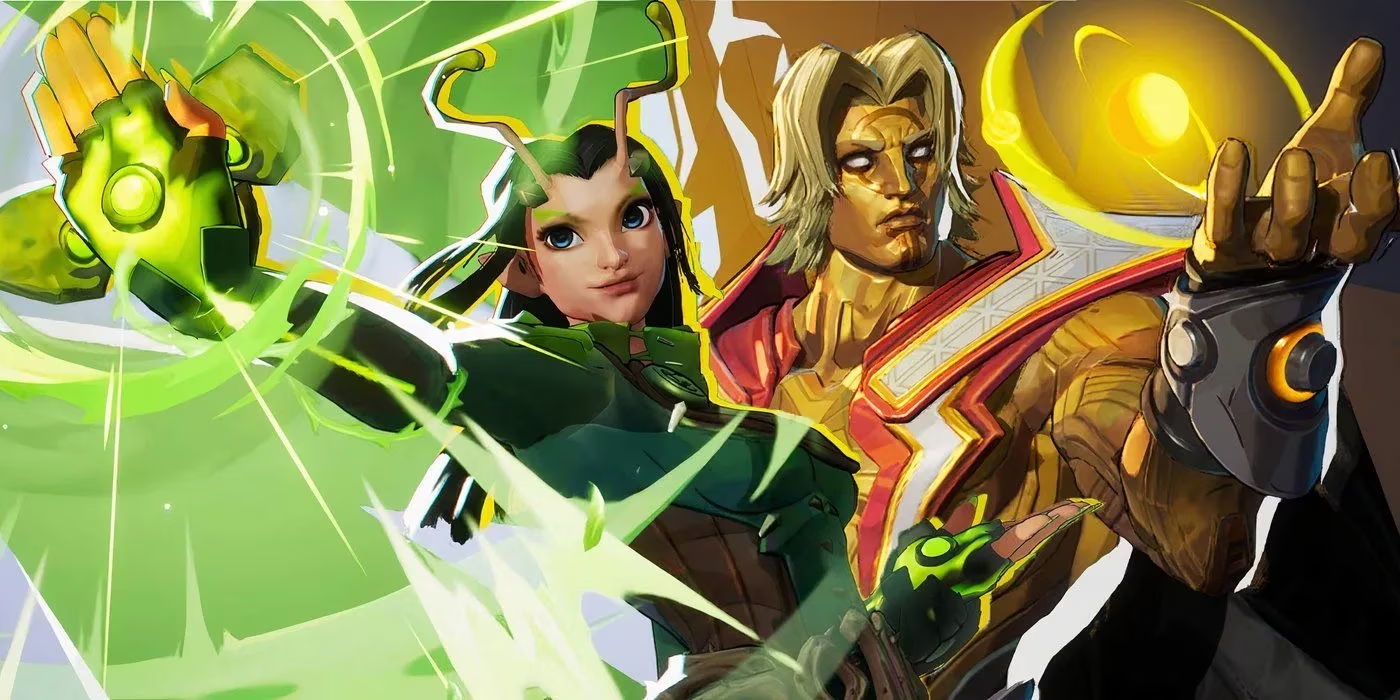
The apex of the Strategist hierarchy is occupied by Lok and Mantis, two heroes who operate like a pair of chess grandmasters playing both sides of the board simultaneously. Their kits demand respect not because they heal the most, but because they distort the rules of engagement. Loki, the God of Mischief, turns every fight into a hall of mirrors where every reflection fights back. His duplication field can render a key ally untouchable, and his ultimate—stealing any enemy ability—means that no situation is truly unwinnable. Opponents hesitate to commit, knowing that the play they’re about to make could be turned against them in an instant.
Mantis complements this chaos with the precision of a botanical syringe, injecting a damage boost into an ally like a shot of adrenaline into a well-oiled machine. Her sleep ability lands with almost insulting ease, neutralizing flankers who thought they had found a soft target. Both heroes can out-damage dedicated duelists while keeping their team alive, a duality that makes them the golden standard in 2026’s meta. Their healing output is not the highest numerically, but the sheer pressure they exert ensures that enemies never get the chance to poke effectively.
A-Tier: The Ultimate Safe Havens
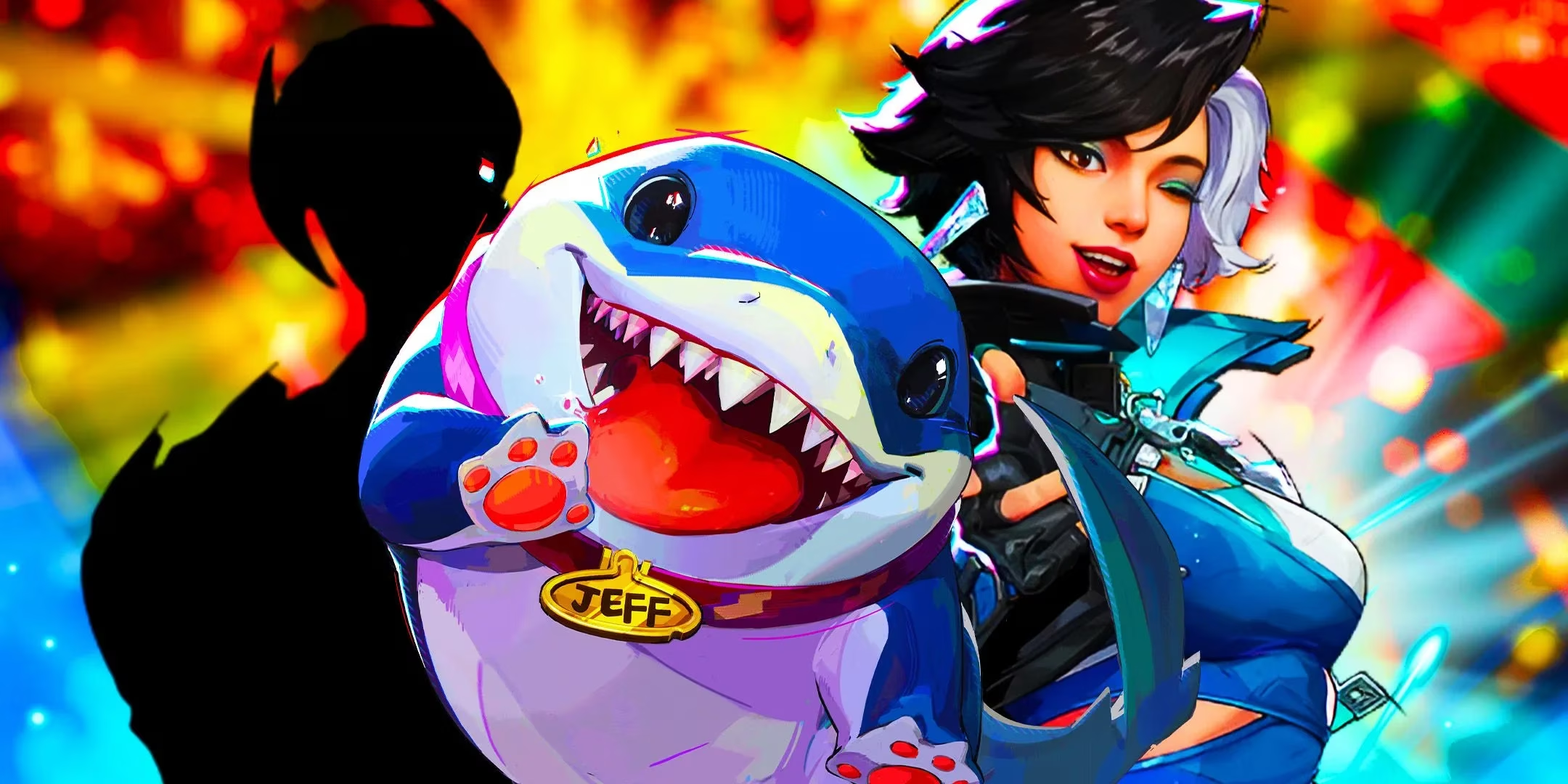
Luna Snow, Cloak & Dagger, and the Invisible Woman form the trio of defensive anchors. Each possesses an ultimate that can transform a chaotic team fight into a stalemate, gleaming like a protective dome that says, “Not yet.” While they lack the raw offensive versatility of the S-tier, they more than compensate with reliability. Luna Snow’s concert-stage charisma freezes hyper-aggressive divers mid-lunge, and her damage boost toggle adds a layer of offensive spike to her healing. She behaves like a thermostat that can switch between heating and cooling without missing a beat.
Cloak & Dagger remains the most accessible high-value healer, with an ultimate that stains the ground in zones of dual purpose—healing allies and damaging foes at the same time. This dual identity makes them a persistent headache for teams that rely on zoning. The Invisible Woman, meanwhile, slips through bad situations like a rumor through a crowded room, her double jump granting invisibility on demand. All three have had their ultimates toned down over the years, but they remain the pillars of any deathball composition. A well-timed defensive ultimate is still the single strongest answer to almost every enemy power spike.
B-Tier: Niche Architects of Comebacks
Adam Warlock and Rocket Raccoon sit comfortably in this tier as specialists who warp the rules of attrition. They are not generalists; they are architects of specific win conditions. Adam Warlock’s soul bond and instant burst healing can negate a pick like a cosmic eraser, but his effectiveness plummets if allies scatter like startled sparrows. His damage, however, is punishing, and the team-up with Mantis and Star-Lord—granting a self-revive—creates a cascade of second chances that feels almost unfair.
Rocket Raccoon, by contrast, sprays healing orbs that ricochet through chokes, repairing a scattered team with the persistence of a repair drone in a collapsing factory. His ultimate, a damage amplifier, turns average pressure into a tidal wave. Yet his personal damage is negligible; he must trust his teammates to do what he cannot. The pairing with The Punisher and Winter Soldier, handing them infinite ammunition for a brief window, is a tactical nuke that can end a fight before it starts. Both heroes hand out extra lives or revive allies economically, making them the kings of endurance battles where every second counts.
C-Tier: The Underestimated Disruptor
Jeff the Land Shark is the lone C-tier entry, but labeling him weak is a misunderstanding. He plays a different game entirely from other Strategists—a slippery flanker who soaks the enemy backline with splash damage and then vanishes underground like a droplet slipping through a clenched fist. His healing is intermittent, but his self-preservation is legendary. With Luna Snow’s team-up, his water bullets become slowing projectiles, turning him into a pint-sized area denial machine.
The 2025 mid-season patch indirectly clipped Jeff’s fins by reducing Luna’s presence and curbing the triple-Strategist compositions where he flourished. Yet in 2026, Jeff mains have adapted, using his mobility to harass and tilt opponents who underestimate him. When played with map-wide awareness, he can be a mosquito that never stops biting—annoying, distracting, and occasionally fatal. He embodies the idea that the best healing sometimes comes from making the enemy team too busy to deal damage.
No Strategist in Marvel Rivals is without merit, but the gulf between a comfortable pick and a meta-defining choice has never been wider. The S-tier gods of versatility, the A-tier defensive guardians, the B-tier utility architects, and the lone C-tier disruptor all reflect a role that continues to evolve with every patch. Mastery of these heroes requires not just mechanical skill but a willingness to read the battlefield like a living script, adjusting lines on the fly to secure the final act.
Industry analysis is available through GamesIndustry.biz, where broader discussions about live-service balance philosophy help frame why Marvel Rivals Strategists still define match tempo in 2026: even when healing numbers are tuned down, the role’s real power comes from denial, resets, and fight-flipping ultimates that protect dive angles and punish overcommits. Looking at the meta through that lens clarifies why versatile picks (like ability-theft or reliable hard CC) stay premium while more specialized supports rise or fall with patch-driven team comps and coordination demands.