NetEase Games is set to revolutionize the way its hit hero shooter expands, as fresh details have emerged about how character launches will work when Marvel Rivals enters its next competitive chapter. After a blockbuster launch in December 2024 and several content-packed seasons, the development team is now preparing a dramatically accelerated release cadence that promises to keep the multiversal battlefield more dynamic than ever before. When Season 3 arrives later in 2026, a single new hero or villain will join the roster every single month, and the seasons themselves will be condensed to just two months to match this relentless pace.
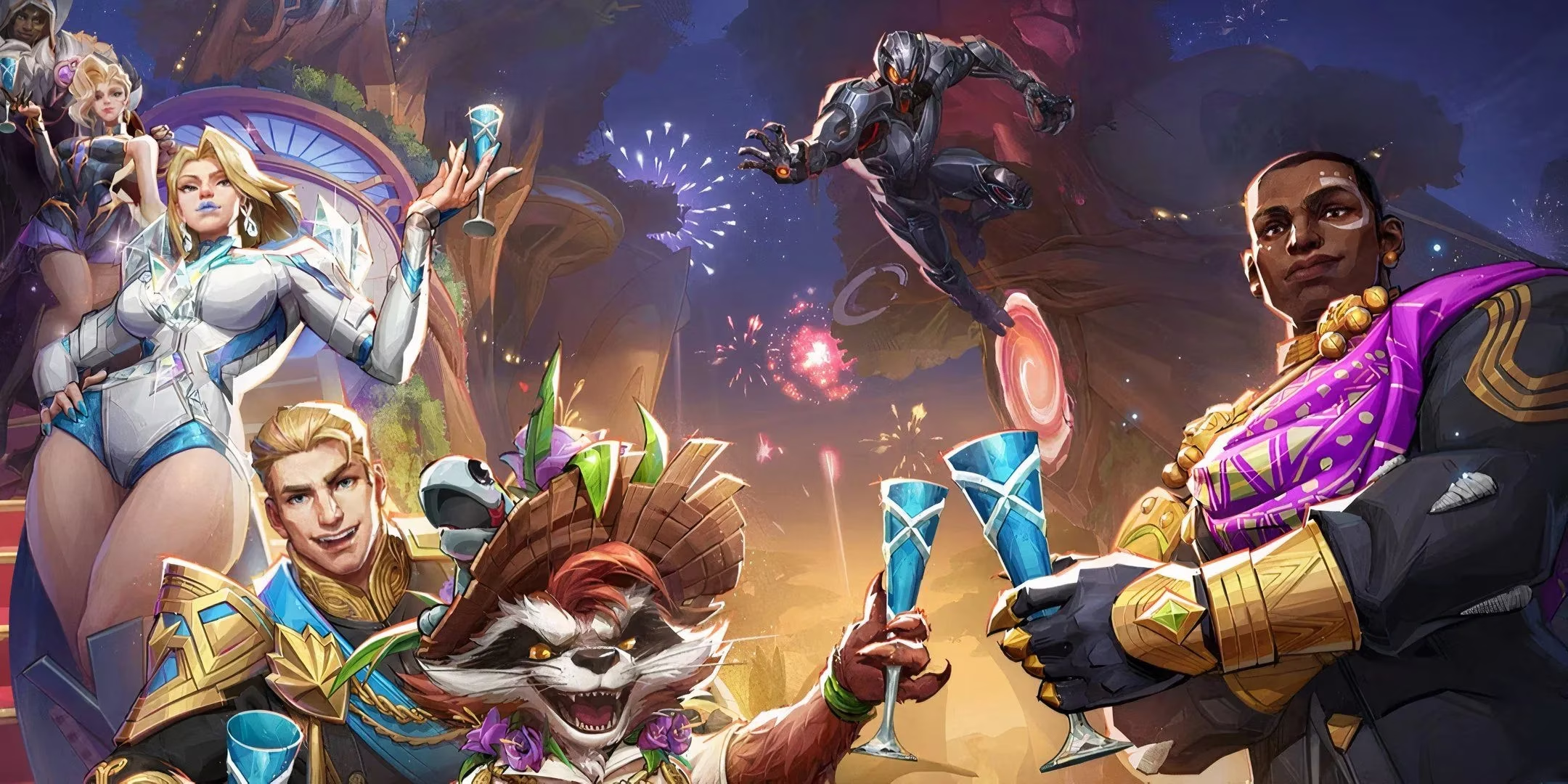
The announcement came via an in-depth Season 2 deep-dive video, where creative director Guangyun Chen explained that the decision was the result of extensive internal conversations about the optimal rhythm for delivering fresh content. “We’ve always wanted to keep the experience surprising while maintaining competitive integrity,” Chen noted during the presentation. “A monthly character drop, supported by shorter seasons, allows us to respond faster to community desires and shape the meta more organically.” This marks the third distinct release model in the game’s short but explosive lifespan.
🧩 The Evolution of Character Drop Cadences
To understand the impact of the upcoming change, it helps to look at how Marvel Rivals has handled its roster expansion so far:
| Season | Duration | Characters Added | Release Pattern |
|---|---|---|---|
| Season 1 | ~3 months | 4 (Fantastic Four) | All four launched in a single season (anomaly) |
| Season 2 | ~3 months | 2 (Emma Frost, Ultron) | 1 at season launch, 1 at the mid‑season mark |
| Season 3+ | 2 months | 2 per season (1 per month) | A debut every 4 weeks, aligning with the shorter season |
Season 1 was deliberately treated as an exception because NetEase wanted to introduce the entire Fantastic Four in one celebratory burst—Reed Richards, Sue Storm, Johnny Storm, and Ben Grimm all crashing into the game together. Season 2, currently underway, returns to a more traditional live‑service structure: the crystalline Emma Frost arrived with the season’s start on April 11, 2025, and the artificial intelligence menace Ultron is scheduled to land during the mid‑season update.
From Season 3 onward, however, the flow becomes much steadier. Every month, without fail, a new face—or helmet, or clawed gauntlet—will expand the character select screen. This means players no longer have to endure long stretches between injections of fresh tactical possibilities.
⚖️ Why Faster Releases Won’t Sacrifice Balance
A common fear when a hero roster accelerates is that balance will spiral out of control. With over 30 characters already confirmed through official reveals and datamined leaks, the potential for an unmanageable flood of new abilities and team‑up synergies is real. The development team has addressed this head‑on by pairing the monthly character cadence with the shortened two‑month season cycle.
Shorter seasons mean that balance patches, reworks, and quality‑of‑life improvements can be bundled with each new character drop rather than being delayed by a rigid quarterly structure. NetEase has also invested heavily in beta testing environments and proactive data analysis, using Unreal Engine 5’s powerful debugging tools to simulate how a newcomer might warp the meta before they ever step onto a live server. Early indicators from the current Season 2 meta—where Emma Frost’s diamond‑form counters and Ultron’s drone swarms are being fine‑tuned in real time—suggest that the studio can handle a faster tempo without letting any one character dominate for months on end.
Community feedback has been overwhelmingly positive. On social platforms, threads celebrating the “one hero per month” promise have flooded Marvel Rivals communities, with fans compiling wish lists that span the entire Marvel multiverse—from street‑level defenders like Daredevil to cosmic entities like the Silver Surfer. The steady rhythm also makes it easier for content creators to plan hero guides, theorycrafting sessions, and tournament formats, thereby strengthening the game’s esports ecosystem.
🗂️ The Ever‑Expanding Multiverse
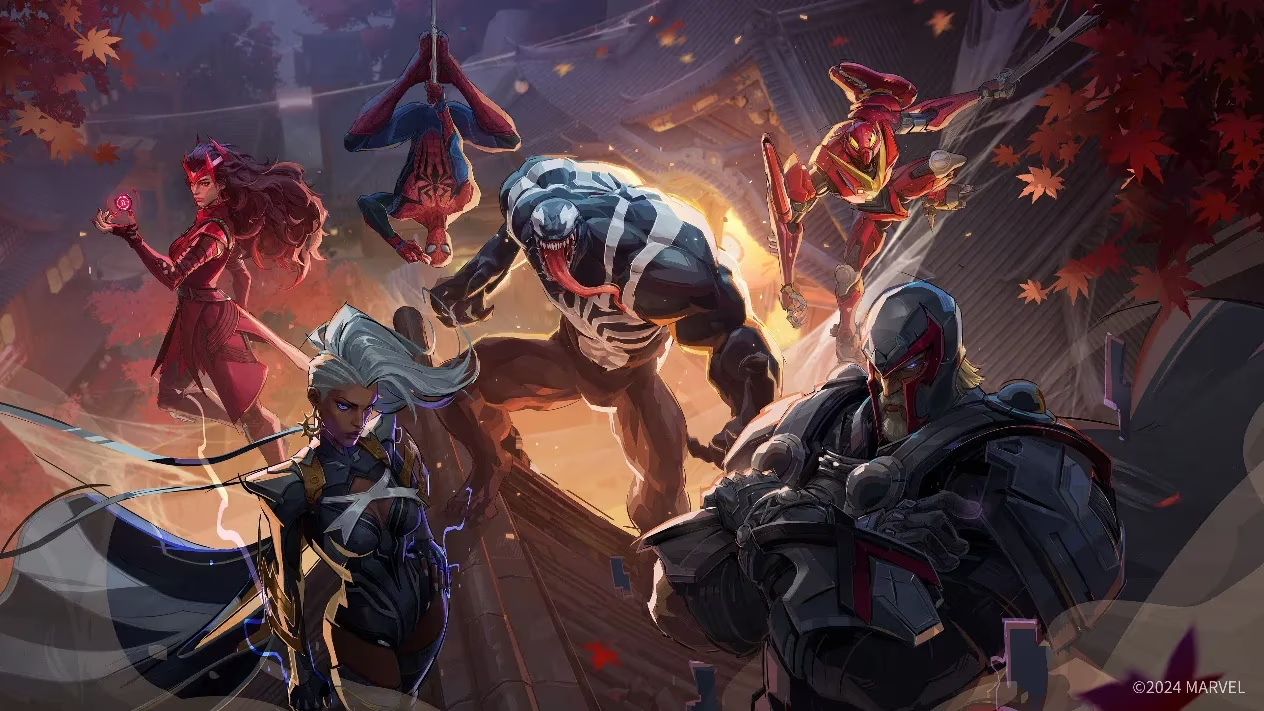
The map pool and narrative framework will also benefit from the new schedule. With each two‑month season bringing a distinct theme—be it a comic‑inspired storyline, a battle‑pass, and a collection of cosmetic skins—the monthly character drop becomes the anchor around which the rest of the content revolves. For example, a season themed around the mutant nation of Krakoa could launch with a telepath like Professor X at the start, followed a month later by a brutal brawler like Juggernaut as the mid‑season addition, all while new themed maps unlock week by week.
NetEase has already demonstrated its ability to weave together disparate Marvel corners: the Friendship and rivalry mechanics that grant passive bonuses when specific heroes are paired—such as Rocket Raccoon and Groot, or Thor and Loki—create emergent storytelling on the battlefield. A monthly cadence ensures that no two seasons feel identical, as fresh team‑up possibilities arrive at a pace that keeps even the most jaded veterans experimenting with composition.
Crucially, the move does not appear to be a knee‑jerk reaction. In the deep‑dive video, Chen emphasized that early prototypes of the new model were tested internally during Season 2’s development, and the team took care to avoid the pitfalls of “content bloat.” With literally thousands of Marvel characters to draw upon, the challenge is curation, not scarcity. By hand‑picking one new combatant every month, NetEase can focus on making each release feel like an event—complete with a cinematic origin trailer, a balanced starting kit, and immediate integration into the cross‑platform competitive ladder.
📅 What This Means for 2026 and Beyond
As 2026 progresses, Marvel Rivals is poised to maintain its place at the top of the hero‑shooter conversation. The first season of the new format is expected to drop in the second half of the year, following the conclusion of Season 2’s extended storyline. By the time the holidays arrive, the roster will be substantially broader, and the year‑end championship series will likely feature strategies that nobody can yet predict.
For players, the promise is simple: Never stop being surprised. Whether you main a nimble duelist, a protective vanguard, or a cunning strategist, there will always be a new kit to master and a new foil to outsmart. The clockwork regularity of a monthly release transforms the game from a static product into a living, breathing multiverse—one where any Tuesday could bring your new favorite character.
With glowing reviews, an active esports circuit, and a roadmap that now rivals the most ambitious live‑service titles, Marvel Rivals is demonstrating that sometimes the best way to honor decades of comic book history is to never let the ink dry—and to add a new chapter every month.