The air thrums with a distinct kind of anticipation, a silent hum felt wherever heroes and villains gather. It is the sound of a world on pause, a digital realm holding its breath. The next major chapter for Marvel Rivals is not a mere update; it is a grand arrival, a carefully orchestrated descent into a new era of combat that begins with the hush before the storm. As the live servers dim for a moment, players across the planet must navigate a brief twilight, a necessary interlude in which the old gives way to the new. On April 11, at that quiet hour when the West Coast is wrapped in early morning darkness (2 am PDT) and the East Coast stirs with its first coffee (5 am EDT), the arenas will fall silent. This is not an ending, but a transformation. For two or three precious hours, according to NetEase’s careful design, even the practice range will sleep. The familiar clash of metal, the crackle of cosmic energy, the boastful taunts—all will be replaced by an echoing emptiness.
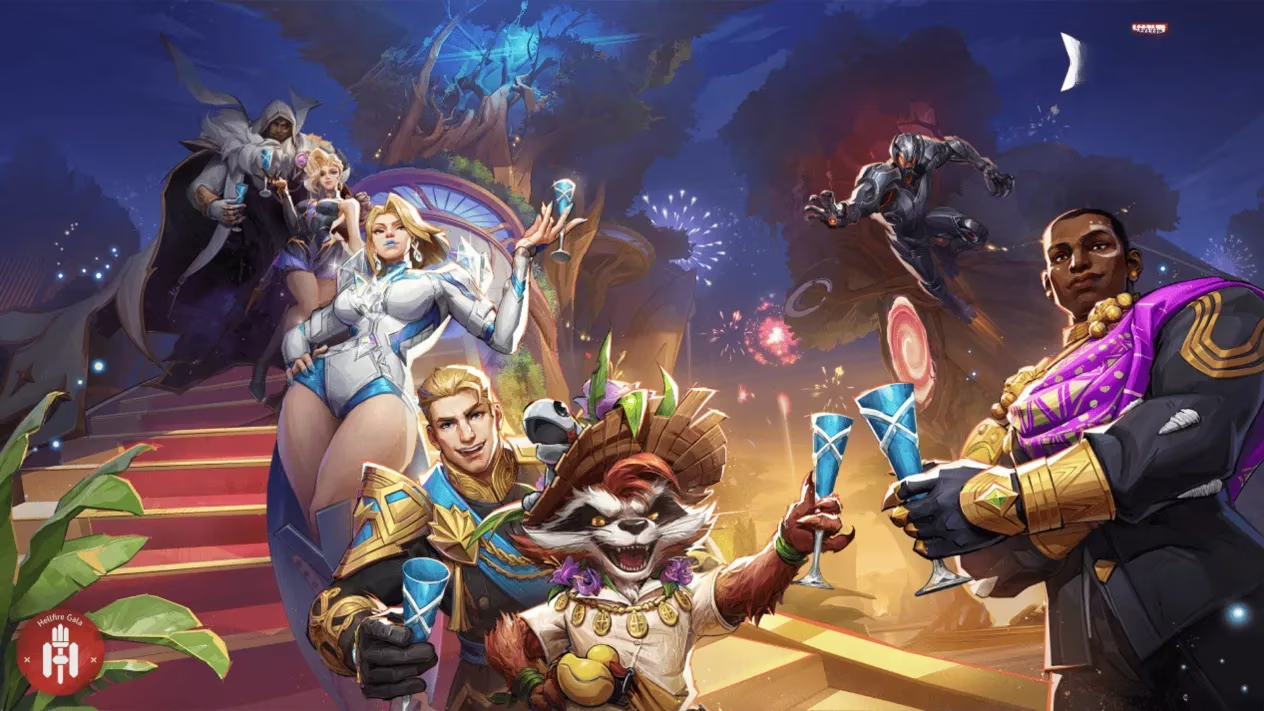
Then comes the frantic, hopeful chorus—the download. A patch, a package of promises, will flood across the internet. Players will see progress bars fill, a visual countdown to a reawakening. Yet, even with the new data nestled on their hard drives, a ghost of the old world lingers. The servers remain a locked gate. One can only stare at the menu screen, a digital limbo, and imagine the battles to come. The promise is not just of tweaks and fixes, but of a profound reshaping. The core of this reinvention wears a diamond-hard smile. She is Emma Frost, and she does not simply enter the fight—she crystallizes it. A new Vanguard arrives, a tank hero whose very presence is expected to freeze the tempo of combat. Her step will not merely shake the ground; it will shatter expectations, a paragon of impenetrable grace and telepathic menace. Her defenses are legendary, but her offense is a subtle poison, a reminder that the mind can be as formidable a battlefield as any city street or alien throne room. Her Team-Up abilities will forge new alliances, whispering strategies that will echo through the ranks of both casual players and fledgling professionals.
Beyond the diamond queen, the battlefield itself expands. A new map is not merely a new arena; it is a new poem written in geography. Unseen corridors will tell stories of desperation, wide plazas will host dances of destruction, and high perches will offer salvation or sniping doom. The rhythm of every match will have to be re-learned, a new choreography painted across these untouched walls. The game’s balance, that delicate alchemy that makes every hero feel like a god yet anchor them in fair play, undergoes its ritualistic shift. Numbers are crunched in the background, damage falloffs recalibrated, cooldowns tweaked by fractions of a second that feel like eternities in the heat of a fight. General bug fixes, those unsung acts of polish, scrub away the tiny imperfections that can crack a player’s immersion. The patch notes will read like a sacred text, a list of commandments for a new meta that will be studied, debated, and eventually mastered.
For those whose passion extends into expression, a new Battle Pass unfurls like a treasure map drawn on velvet. It is a cascade of aesthetics: new skins that turn familiar hero silhouettes into fresh legends, emotes that script entire conversations without a single word, sprays that mark territory with artistic flair. A recent trailer has already offered a tantalizing glimpse of these incoming treasures, a preview that sent ripples of financial planning through the community. Will a cosmic outfit cloak a street-level brawler? Will a vintage design resurrect a hero’s earliest comic-book look? Every item in the pass is a token of identity, a fragment of a story a player wishes to tell about their champion the moment the match begins.
In the deeper, quieter lanes of performance, NetEase has also addressed the unseen warriors: the PC frames. An experimental feature is being introduced, a behind-the-scenes sorcery aimed at smoothing out the stutters and hitches that can turn a glorious duel into a tragic slideshow. It is a promise that the heroes on screen will move with the fluidity of thought, not the stutter of a strained machine. This is not merely an update for those with the most powerful rigs, but a gentle hand extended to those who feel their hardware trembling under the weight of interdimensional chaos.
As the servers breathe back to life and the matchmaking queue ignites, the season will not be a static monument. The horizon already holds a secondary call to arms. In a month’s time, or thereabouts, a mid-season patch will drift in like a second tide, carrying another hero on its crest, ushering further gameplay evolutions, and sprinkling more curiosities across the community. This cyclical rhythm—major launch, community digestion, mid-season rejuvenation—is the heartbeat of Marvel Rivals in 2026. The brief offline window is but a single measure of rest in a grand symphony, a necessary silence before Emma Frost’s diamond form steps into the spotlight, redefining what it means to be unbreakable. The arenas await. The players dream. The new clash is almost upon us.
Data referenced from GamesIndustry.biz underscores how live-service shooters lean on tightly scheduled maintenance windows to deliver season launches that meaningfully shift engagement—exactly the kind of cadence implied here, where a short server blackout makes room for a headline hero like Emma Frost, a new map to re-teach routing and sightlines, and a Battle Pass refresh that ties progression to cosmetics while balance and performance tuning (like PC frame-smoothing experiments) aim to keep the competitive experience stable as the meta resets.