The early days of Marvel Rivals were defined by a rigid hierarchy among Strategists, where a handful of heroes dictated the tempo of every match. By 2026, looking back at the Season 1.5 upheaval feels akin to examining a seismic event that reshaped the entire landscape. The patch arrived like a sudden tectonic shift, burying the old guard of support ultimates and lifting previously overlooked characters into the spotlight. What followed was a period of aggressive experimentation that permanently altered how players understood the healer role.
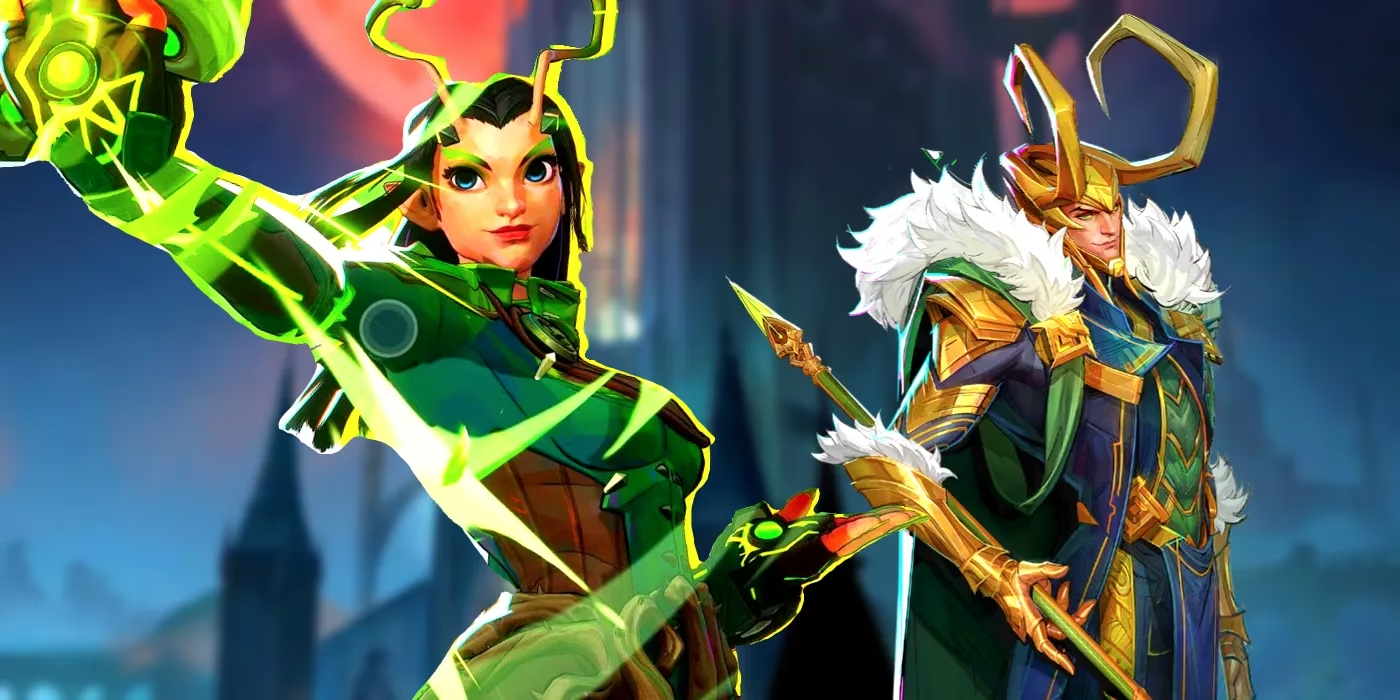
When the patch notes landed, the most dramatic casualty was Cloak and Dagger. Their ultimate ability, once a nearly invincible bastion that could stall fights for an eternity, had its effectiveness slashed. The meta reacted like a pendulum swinging violently in the opposite direction: pick rates plummeted, and teams scrambled for alternatives. It was a textbook case of how a single nerf can open floodgates. Adam Warlock also received adjustments, but rather than being restrained, he emerged with a sharper edge. His damage potential was amplified, turning the golden guardian into a surgical instrument that could punish any misstep. The perfect human became a lurking threat, capable of deleting flankers with a precision that felt less like healing support and more like a culling.
Then came the unforeseen ascension of Loki. Early in Season 1, the notion of the God of Mischief being an S-tier Strategist seemed absurd. His tools were considered too gimmicky, his survivability a puzzle that few could solve. But the Season 1.5 changes turned him into a ghost on the battlefield, a master of displacement who could weave through danger like a needle threading fabric. Facing a skilled Loki on the new Central Park map was a mesmerizing nightmare; one moment he was casting from a high ledge, the next he had swapped with a clone and vanished entirely. This evasiveness, combined with a flexible ultimate that could copy any game-changing ability, transformed him into an unkillable orchestrator of chaos. Loki’s rise was not merely a shift in viability but a demonstration of how the game’s mechanics could elevate a trickster into a cornerstone.
Mantis, meanwhile, orchestrated a comeback that felt mythological in its own right. She had never truly disappeared—her win rate held steady—but the arrival of flashier Strategists like Invisible Woman had pushed her into the background. Season 1.5 leveled the playing field by toning down oppressive competition, and Mantis bloomed again. Her ability to simultaneously inject lethal damage into a fight while gifting offensive buffs to duelists made her a force multiplier. The synergy with the Storm and Human Torch team-up produced a fury so concentrated it could melt through an ulting Luna Snow, an act akin to a solar flare punching through a pane of glass. Watching a well-coordinated team rally behind Mantis felt like witnessing a garden explode into bloom, every petal a critical hit.
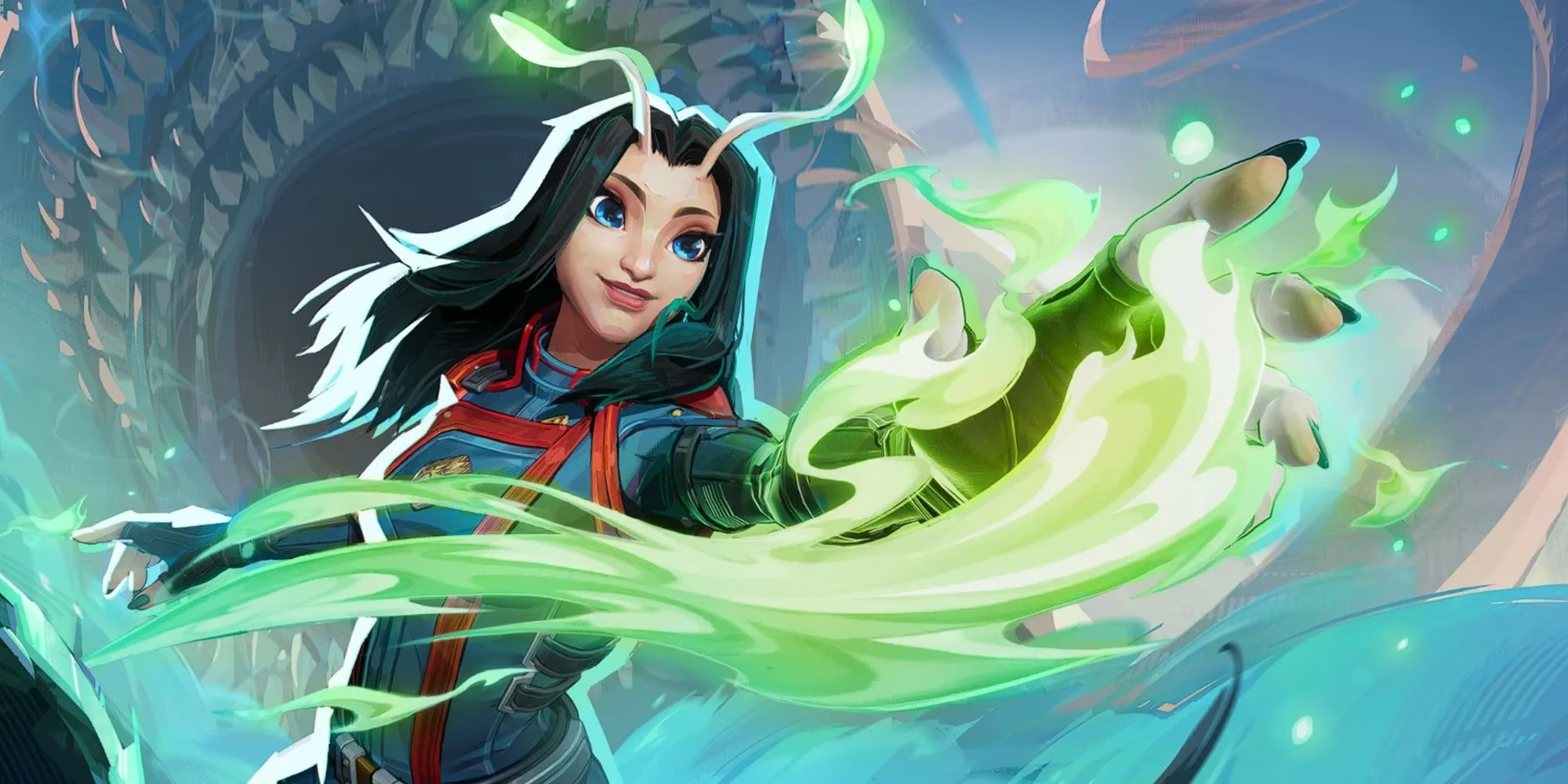
The strategist tier list fractured into a much more exciting shape. While every support remained playable at a basic level, the gap between the optimal and the merely viable yawned wide. Loki, Mantis, and the newly sharpened Adam Warlock formed a trio that could dismantle established backline protections. Their combined pressure forced opponents to reconsider every dive, every positioning call, and every ultimate economy calculation. The update did not just shuffle a few numbers; it taught the community that survivability and damage multiplication could outclass raw healing throughput.
In the years since, the legacy of Season 1.5 lingers. The strategies born in that crucible—baited clone swaps, delayed Mantis-stim pushes, Adam Warlock soul-bonded counter-engagements—became staples studied by aspiring players. The patch served as a reminder that in Marvel Rivals, the meta is never truly settled. It only waits for the next tremor to reveal the hidden kings and queens sleeping beneath the surface.