Marvel Rivals has built a competitive identity around fast team fights, hero synergies, and objective pressure, but its post-match scoreboard remains a blunt instrument. The panel reports total eliminations, deaths, assists, damage dealt, healing, and damage blocked. What it does not report is when those numbers happened, which fights they influenced, or whether they helped move the payload, hold the point, or stop a push. In 2026, as the hero shooter's competitive community continues to dissect every balance patch and ranked reset, that gap between visible statistics and actual impact is still one of the game's most persistent sources of confusion. The original warning around the scoreboard has not aged out. It has become more relevant as players compare performances across mixed-skill lobbies and volatile ranked queues.
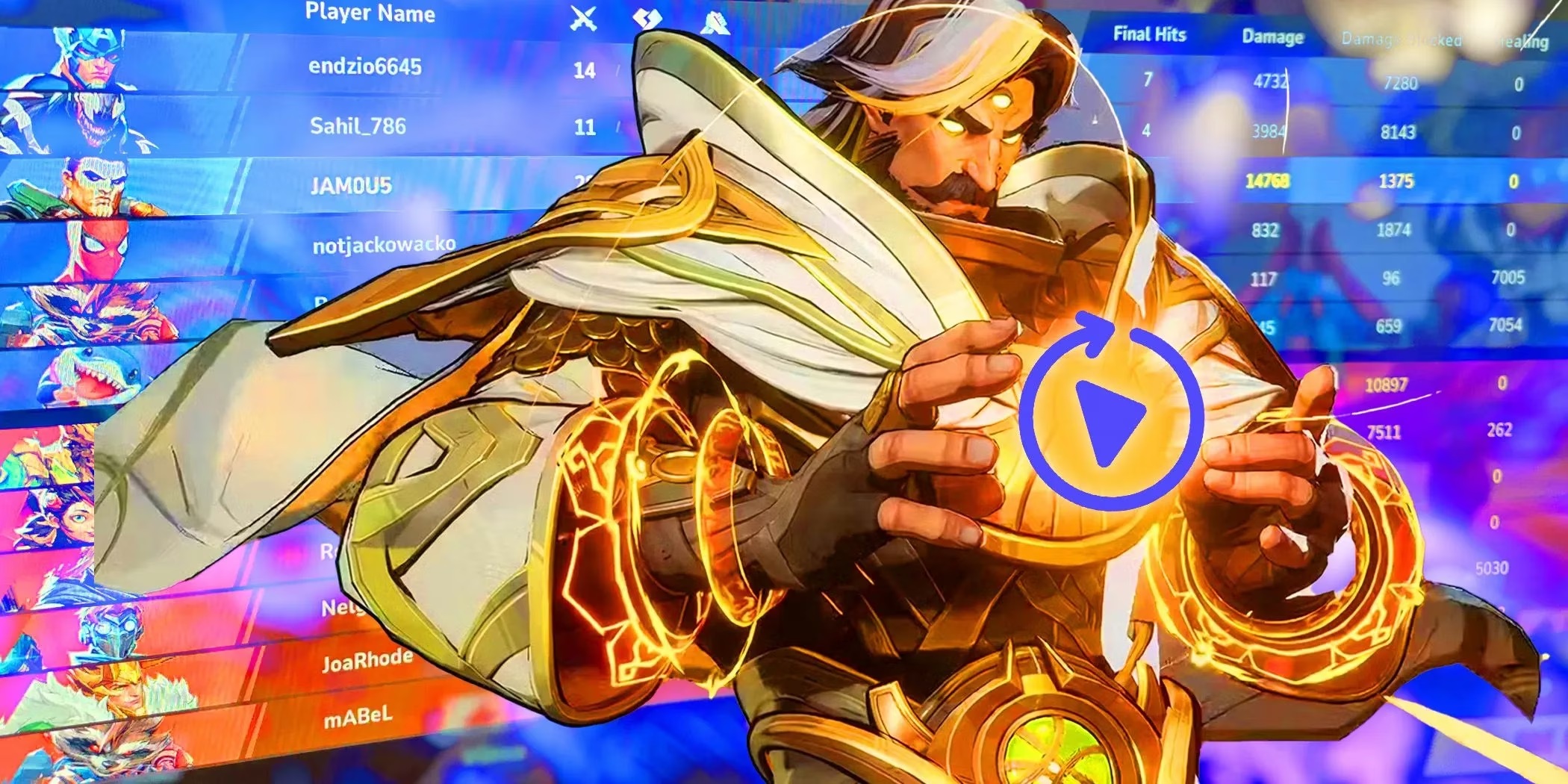
The Scoreboard Shows Output, Not Context
Among the most deceptive parts of the scoreboard is that it does not show the source of anyone's actions. A high healing total may come from careful aim and timely saves, or it may come from heavy reliance on abilities that hit multiple teammates. A Punisher can post strong elimination numbers while sitting in a turret and never engaging with the shotgun. A Moon Knight may burn every attack trying to ambush a lone Strategist, only to be picked off by a Hulk who happened to walk by. The scoreboard cannot separate careful skill from ability spam, and it cannot explain whether a team won because its ultimates landed in close succession or because the enemy was already at a disadvantage.
Fair fights are often rare in Marvel Rivals. Most exchanges are shaped by cooldowns, ultimate economy, positioning, and numbers advantage. When a team is at a three-player disadvantage or worse, the correct play is usually to retreat and regroup rather than feed another kill. Abilities are not everything, either. Players can still win a team fight with regular attacks and quick melee, and those tools often require more aim, skill, and character knowledge. Certain heroes are built for mid- to short-range pressure even when they use guns. Rocket Raccoon's primary fire, for example, rewards players who understand that his reticle and damage profile want close engagements.
Damage Without Objective Impact Is Noise
Many players feel confident when they see that they dealt or blocked the most damage. The more important question is who they were attacking and what that damage accomplished. Players can shoot an enemy Peni Parker all day while she stands in her webs and auto-heals, but that pressure means little unless someone destroys her nest and actually eliminates her. Bitter players may use low numbers to belittle teammates or opponents, yet those same statistics might have been exactly what won the match.
Marvel Rivals is an objective-based game, and the most important factor is whether a player's actions set up their team to win or strongly disrupt the enemy. Staggered deaths that misalign respawns can cause a match to spiral out of control, and that disruption is often more valuable than a six-man wipe or the coveted Ace elimination. In some rare cases, purposely dying to meet back up with the team is the correct choice. High damage may not even matter if it occurred far beyond the objective. This often happens on Convergence maps, where defenders get greedy, overextend, and attempt to spawn camp while an invisible Psylocke or Loki steals the point uncontested.
| Stat | What it hides | Better question |
|---|---|---|
| Eliminations | Timing, target value, solo picks versus cleanup | Did the pick open the objective? |
| Damage dealt | Padding, range, healing reversal, wasted pressure | Did it force a retreat or secure a kill? |
| Healing | Line of sight, risk, target priority | Did the heal save a key ally during the fight? |
| Damage blocked | Passive shielding, wasted mitigation | Did it create space for the team? |
Replays Expose Positioning and Timing
Staring at the scoreboard during or after a match is often a waste of time. A full replay shows where a player did well, what mistakes were made, and how those mistakes can be corrected in the next match. It also shows how allies and enemies performed, which turns every loss into a learning tool. Important factors include line of sight for healers and against the enemy. Did a player duck behind cover but also remain visible to the team's Strategist? Just because Star-Lord can fly wherever he pleases does not mean Adam Warlock or Mantis can see him. Shouting and pinging for healing is pointless unless the player repositions.
Replays also reveal who was overextended and nowhere near their allies. That can work for diving characters such as Venom and Captain America, who want to attack the enemy backline and then escape. But if they have no escape plan, going too far is a death sentence. Figuring out the flaws in the game plan is the first step to becoming a better Marvel Rivals player. Replay mode is an excellent means of understanding specific maps and what to do in a given situation. Players can reduce reaction time and use the proper ability with practice. Even with a few clueless teammates, a knowledgeable player can help elevate the team. It may not always be enough to win, but it can turn an absolute bloodbath into a more even stalemate.
What Players Should Track Instead
-
🎯 Objective time and contest pressure: Did the player actually hold, flip, or stall the point?
-
⏱️ Ultimate economy: Were ultimates used to win a fight, or wasted after the fight was already lost?
-
🛡️ Death timing: Did deaths stagger the team, or did they allow a cleaner regroup?
-
👁️ Line of sight: Could healers see the player when healing was needed?
-
🔁 Cooldown trades: Did the player force important enemy abilities before committing?
-
🧭 Space creation: Did the player pull enemy attention so allies could advance or escape?
The scoreboard is not useless. It is a starting point. In 2026, the better path is to pair it with replay review and objective data. A player with modest damage but timely picks, smart stalls, and clean ultimate cycles may be far more valuable than a teammate with gaudy totals. Marvel Rivals rewards impact, not arithmetic, and the players who understand that difference are the ones most likely to improve.
Expert commentary is drawn from GamesIndustry.biz, whose reporting on competitive multiplayer design and live-service retention helps explain why raw scoreboard totals often fail to reflect real match impact. In a game like Marvel Rivals, broader industry analysis supports the idea that players improve more from understanding fight timing, role execution, and objective conversion than from focusing on surface-level damage or elimination counts alone.