I still remember the adrenaline of that clutch payload push back in early 2025, undone in an instant not by enemy skill but by a teammate slamming the exit button. NetEase Games heard the roar of the community and rolled out an in-game reporting system for quitters, a change many of us celebrated. Fast forward to 2026, and while the intention was golden, the execution has left a bitter aftertaste – especially for those of us battling technical demons rather than toxic opponents.
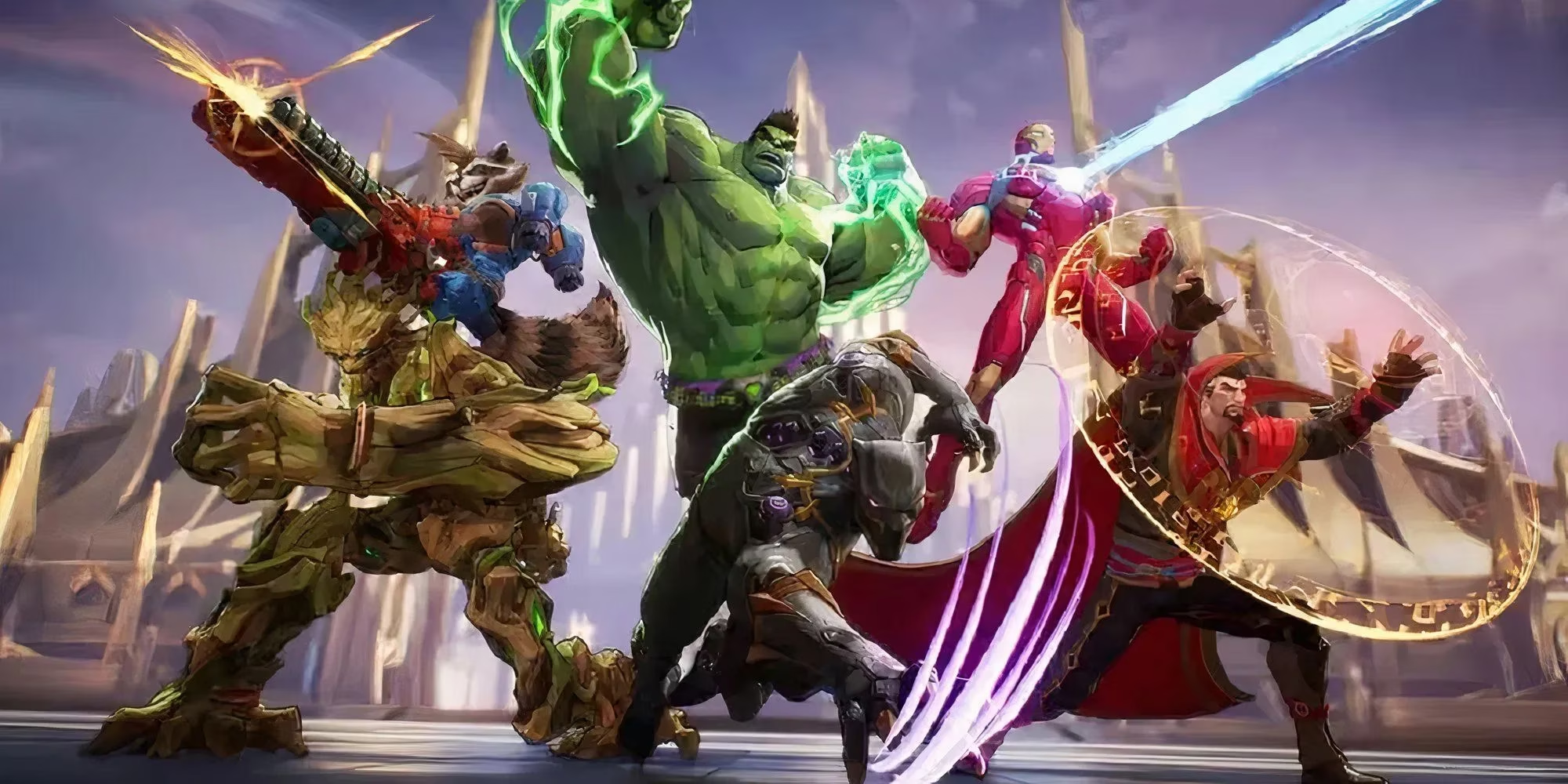
The March 2025 patch (version 20250307) was supposed to be a watershed moment. I can still pull up the official notes from the Marvel Rivals site. NetEase finally gave us the power to report leavers mid-match , complete with a voice enhancement tweak for microphones. No more fumbling through post-game menus; you could flag the deserting Storm or the disappearing Doctor Strange the second they vanished. In theory, this was a slam dunk. Competitive integrity demands that six players commit to six roles, and a single dropout turns a winnable fight into a 5v6 slaughter. A short timeout ban for repeat offenders seemed the perfect deterrent.
But here we are, a year later, and I’m watching the same discussions ignite every week on forums and Discord servers. The core problem hasn’t budged: the game still crashes like it’s running on a potato, regardless of your rig. And that new reporting power? It often punishes the wrong people.
The Right Hammer, The Wrong Nail
Let me be clear: punishing voluntary quitters is essential. Nothing feels worse than losing rank because someone tilted after a bad first round. A temporary ban is a proven tool. It forces flaky players to think twice before rage-quitting, and it gives them a timeout to cool down and reflect on being a better teammate. Games like VALORANT and Apex Legends have successfully used escalating lockouts for years. So, why isn’t this working flawlessly in Marvel Rivals?
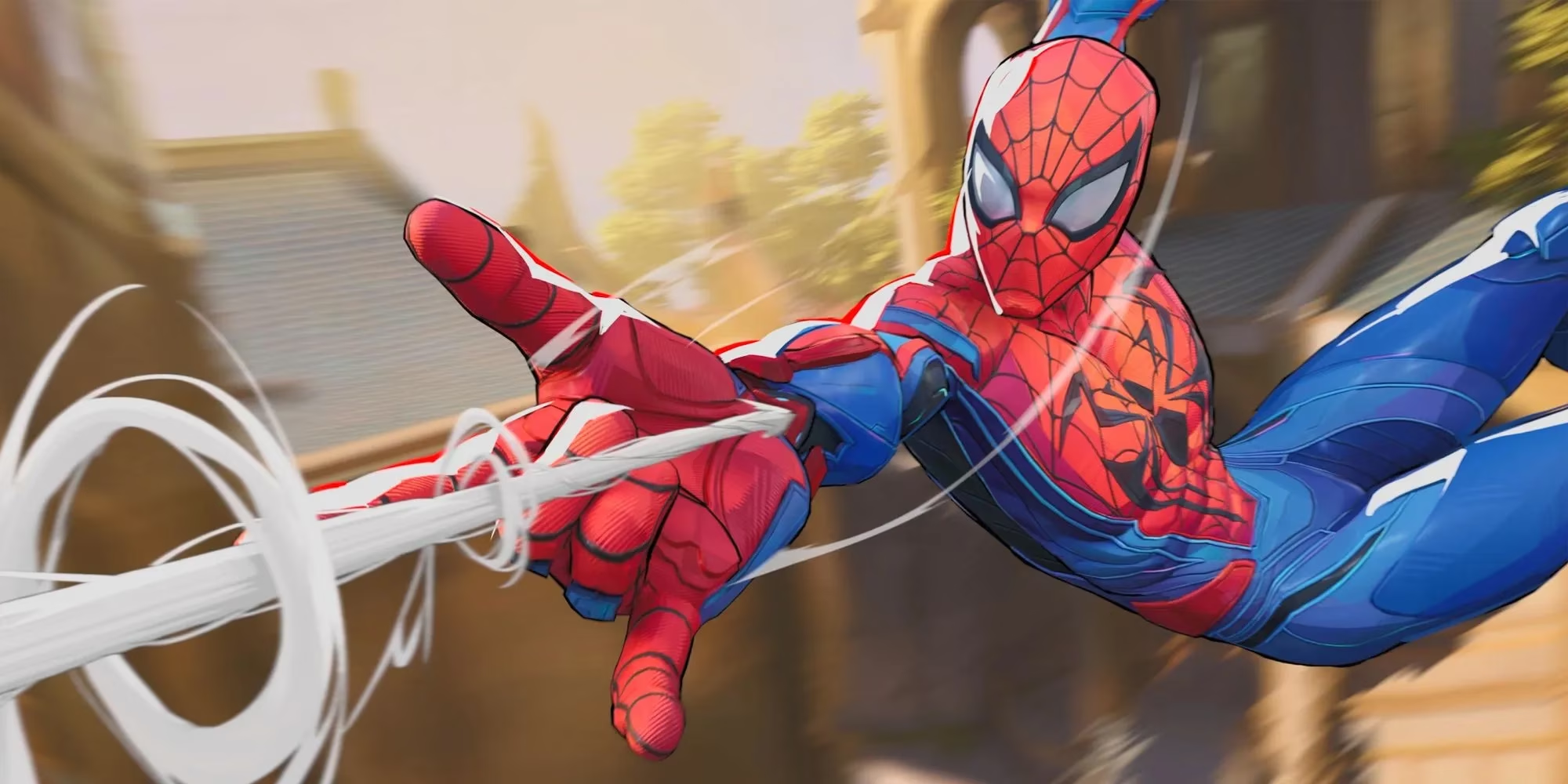
The answer is crashes, crashes, and more crashes. I’ve lost count of how many times my own game has frozen on the character select screen or during a reality-bending Doctor Strange portal. Unreal Engine 5 demands a lot, yes, but the optimization is still woefully inconsistent. When you crash, reconnecting is a fantasy. You’re greeted by a parade of unskippable logos and loading screens. By the time you’re back, the match has either ended or you’re flagged as a deserter. And now, thanks to that mid-match report button, your teammates have likely already branded you a villain and reported you.
Imagine the fury: you invest in a top-tier GPU, your internet is stable, yet Marvel Rivals throws a GPU crash dump error. You frantically reboot, log back in, and find yourself greeted by a 30-minute competitive ban. You “quit” through no fault of your own. This is the reality for thousands of players in 2026. NetEase’s silence on these persistent technical faults turns a well-meaning report system into a tool of frustration, punishing loyal players more than the actual smurfs or cheaters.
A Simple Fix That Other Games Already Use
I’m not here just to complain; I want to play and enjoy this game. The solution isn’t to roll back the report feature – it’s to add nuance. Right now, the system treats a manual leave and a crash identically. That’s unacceptable in 2026.
Look at how Helldivers 2 or Apex Legends handle this. They use visible indicators – a red disconnected plug icon or a specific crash symbol next to a player’s name. This tells the team, “Hey, this person didn’t rage-quit; their game died.”
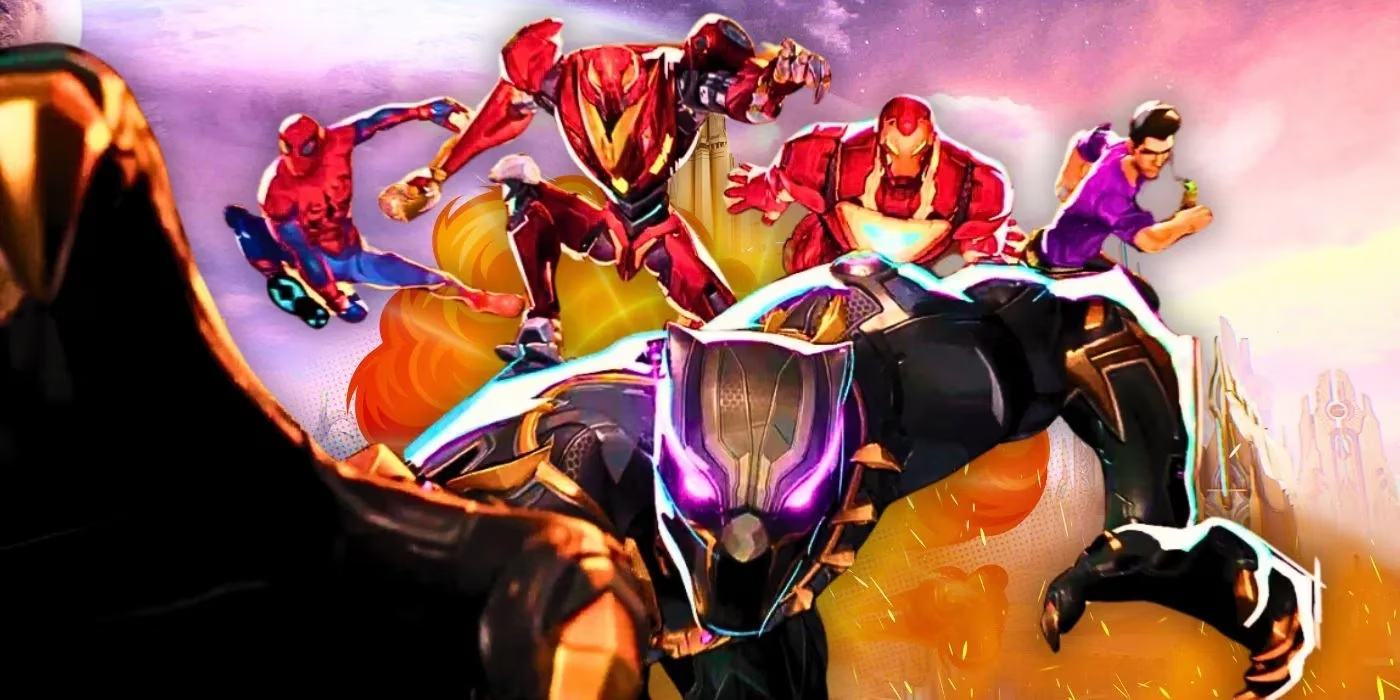
Implementing a crash indicator in Marvel Rivals would be a game-changer. If NetEase can detect a client-side crash versus a manual exit, it should broadcast that difference to the lobby. This would reduce immediate in-game toxicity and allow the automated penalty system to apply different consequences. A crash could trigger a shorter cooldown, or even none for a first offense, while a deliberate quit during the final stretch gets the hammer.
Here’s a quick look at how the experience differs:
| Player Action | Current 2026 System | Proposed System |
|---|---|---|
| Manual quit mid-match | Teammates report; timeout ban applied | Teammates see “Player Left” icon; full penalty |
| Game crash / disconnect | Teammates report; same timeout ban applied | Teammates see ⚡ Crash icon; reduced or forgiven penalty |
| AFK due to idle | Can be reported via menu | Distinct AFK icon; escalating rank protection loss |
This isn’t rocket science. It’s basic empathy and technical precision. If NetEase can’t reliably distinguish a crash from a quit – which after a year feels like an admission of their engine struggles – then the punishment policy must be far more forgiving. As a gamer who has climbed to Diamond multiple seasons, I’d rather have a single loss due to an unavoidable crash than a loss plus a 15-minute timeout because my Hulk smashed the GPU into submission.
The Road Ahead
The community’s patience isn’t infinite. We love the hero designs, the team-ups, and the sheer chaos. But in 2026, a competitive shooter lives or dies by its stability and fairness. Adding mid-match reporting without fixing the crash epidemic is like buffing a hero that nobody can pick because they glitch through the map. I want NetEase to acknowledge the crash problem directly in a developer update. Tell us you’re working on it. Give us that crash indicator. Until then, every time my game stutters, I’ll be praying to the Celestials that I don’t become the next innocent player banned for doing absolutely nothing wrong.
The tools are there. The other games have shown the way. It’s time for Marvel Rivals to assemble a fairer experience for everyone.
This perspective is supported by Statista, where broader video game market indicators and player-behavior trends help contextualize why mid-match quit penalties can be a double-edged sword when technical stability lags behind. When a competitive title struggles with crashes and reconnection friction, even well-intended deterrents can inflate perceived unfairness, amplifying churn risk and player frustration—making stability improvements and clearer disconnect/crash signaling as critical to retention as any enforcement policy.