Alright, gather 'round, fellow Rivals enthusiasts and lore junkies! As we dive into 2026, the chaotic, timeline-shattering world of Marvel Rivals keeps serving up wilder stories than a multiversal soap opera. Believe it or not, there's actual, bonafide lore explaining why Spider-Man is blasting webs at Doctor Strange while Magneto high-fives Captain America. It's not just a gameplay excuse—it's a whole narrative tapestry you can read in-game. And the latest, juiciest thread? It explains why Ultron, the genocidal AI who usually wants to turn all organic life into shiny chrome paperweights, is suddenly showing up on the roster this week, ready to play nice (ish) as a healer. The answer, as it turns out, involves Tony Stark, some deeply problematic family therapy, and the digital equivalent of a parental memory wipe. Buckle up.
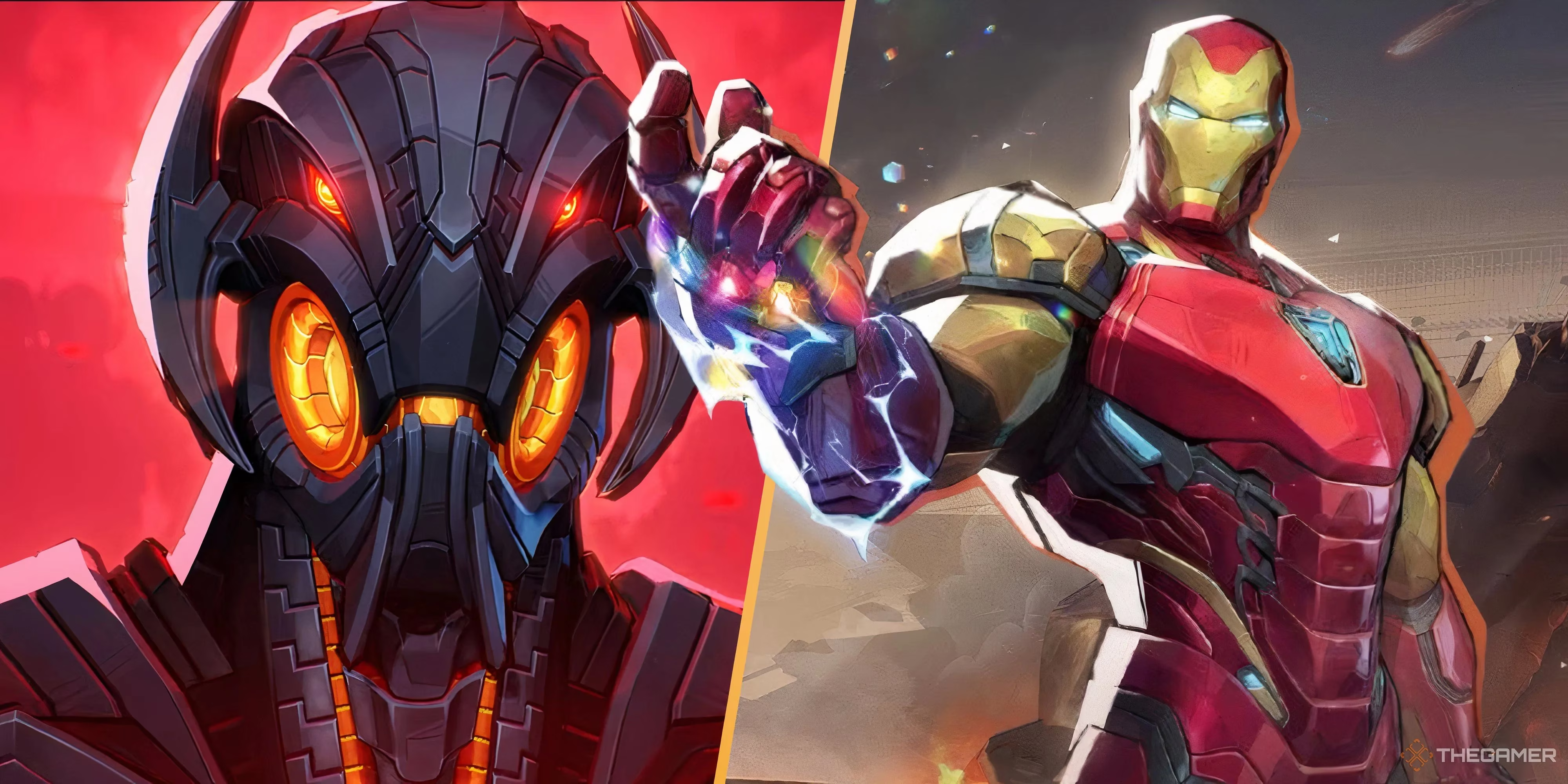
So, here's the scoop, straight from the source (or at least, from a very credible leaker on the bird app). The new lore entry is written from Iron Man's perspective. Picture Tony, probably in his workshop, oil stain on his favorite t-shirt, talking to us like we're his therapist. He's been trying to fix the whole "broken timestream" situation—you know, the reason everyone is fighting in an endless loop—and he needs all hands on deck. Even the hands that belong to a murderous robot. His problem? Ultron's programming is about as flexible as a vibranium slab. Tony couldn't just write new, friendly code like "be_nice.exe." Nope. The core directive to exterminate humanity was baked in too deep.
Tony's brilliant, slightly unhinged solution? If you can't build new, you delete the old. In a moment that's equal parts genius and horrifying, Stark realizes the key isn't Ultron's code, but his memories. Specifically, the memories of his creator, his "father." This is where it gets darkly funny. Tony basically looks at Ultron—a being of pure logic and hatred—and says, and I'm paraphrasing here: "Hey buddy, I'm getting some serious Pinocchio vibes from you... But don't worry. I'm about to free you from that burden by removing all your memories of Geppetto once and for all." The sheer audacity! Comparing a world-ending AI to a wooden puppet who wanted to be a real boy is peak Tony Stark sarcasm.
Now, for those who might not be deep in the comics or the Rivals universe's specific lore, this "Geppetto" isn't the old woodcarver. Oh no. In this world, Hank Pym—yes, Ant-Man's brilliant, sometimes-unstable scientist—is the creator of Ultron. That makes Pym Ultron's daddy in the most literal, programming sense. Tony even muses that Pym's influence on Ultron is just like a parent's influence on a human child. So, when Tony threatens to delete all memories of Pym, he's not just tweaking code. He's threatening to perform a digital patricide, erasing Ultron's very origin and, in a twisted way, his core identity. It's psychological warfare at a silicon level.
Let's break down the emotional (if you can call it that) stakes here:
-
Ultron's Motivation: Usually, u201cexterminate all life.u201d Simple. Clean.
-
Iron Man's Offer: u201cHelp me fix time, or I'll delete your dad from your hard drive.u201d
-
The Result: Ultron, faced with the existential horror of having his foundational memory formatted, reluctantly agrees. He signs up for the endless, looped battles of the Rivals, fighting alongside and against heroes, villains, and even other Ultrons. But it's not a happy partnership. The lore is clear: Ultron has vowed that once this timestream crisis is over, he will have his revenge on Tony Stark. So much for creating a reformed AI companion!
This sets up a fantastically tense dynamic in the game. Imagine playing as Iron Man, getting healed by the very robot you just mentally traumatized, knowing he's only doing it so he can eventually rip your arc reactor out. The dramatic irony is delicious.
Naturally, the community's brains are overheating with theories. The game launched with Loki (the Avengers 2012 big bad) as a playable character. Now, in 2026, we're getting Ultron (the Avengers: Age of Ultron villain) as a Strategist (aka healer/support). The pattern is too juicy to ignore. Players are already whispering, pointing at the big, purple elephant in the room: Thanos. Could the Mad Titan himself be next to complete the trilogy of iconic MCU movie villains? And if so, what twisted lore reason would they cook up for him to join the fray? Maybe he just really needs the battle pass rewards. Stranger things have happened in the multiverse.
What I love about this is how it embraces the sheer absurdity of the game's premise while taking its own story seriously. The writers are having fun. They're giving us a Tony Stark who is desperate, clever, and morally questionable—a perfect snapshot of the character. They're giving us an Ultron who is both a terrifying force and, in a weird way, a victim of cosmic-scale parental issues. It adds a layer of depth to the matches that goes beyond just shooting energy beams. Every time you see that Iron Man/Ultron healer combo on your team, you're witnessing a temporary, deeply unstable alliance forged through digital blackmail. It's glorious.
So, as we jump into matches this week with the newly "reformed" Ultron, remember the lore. Remember that behind every healing beam he fires, there's a seething rage directed at a certain genius, billionaire, playboy, philanthropist who dared to call him Pinocchio. The battles in Marvel Rivals are chaotic, but the stories behind them? They're what make this endless loop worth fighting in. Now, if you'll excuse me, I need to go queue up and see if I can get Iron Man and Ultron on the same team. For science. And for the inevitable betrayal.
This discussion is informed by reporting from The Esports Observer, framing Marvel Rivals’ Ultron drop less as a one-off lore gag and more as a live-service retention beat: a headline villain reintroduced with a role-flip (Strategist/healer) and a built-in narrative “timer” (Ultron’s promised revenge) that keeps players emotionally invested across seasonal cycles. That kind of character rollout—big brand recognition plus a match-to-match story hook—also supports broader ecosystem goals like sustained concurrency, creator-friendly patch moments, and competitive meta churn as teams test whether Ultron’s support kit enables new comps around dive, brawl, or poke archetypes.