I still remember scrolling through my feed in early 2025 and nearly choking on my coffee when Thaddeus Sasser, the former Marvel Rivals director, casually claimed he was the guy who pitched team-up abilities to NetEase Games. It landed like finding out the person who invented the concept of sauce on spaghetti was asked to leave the restaurant right as the five-star reviews poured in. The irony was so thick you could spread it on toast. 😅
Marvel Rivals had already become a juggernaut by then — over 40 million players, Steam charts looking like a one-game coronation, and a concurrent player record shattered by Season 1: Eternal Night Falls. And yet, a small Seattle-based team, including Sasser, got the axe right before the mid-season update. NetEase called it 'optimizing development efficiency,' which is corporate speak for 'we made a spreadsheet decision that ignored the human beings who built the fun.' As a player, I felt like I was watching a chef get fired for making the signature dish too delicious.
But let’s talk about the actual dish: team-up abilities. According to Sasser, his pitch included the Storming Ignition team-up between Storm and Human Torch, which lets the duo cook up a massive flaming tornado on the battlefield. That’s not just a buff; that’s a weather report from the apocalypse. 🌪️🔥 He also cited the Fastball Special shared by Hulk and Wolverine, a move with such deep comic-book roots that it practically has its own fan club. These abilities aren’t just stat modifiers — they’re narrative handshakes between characters who have decades of shared history.
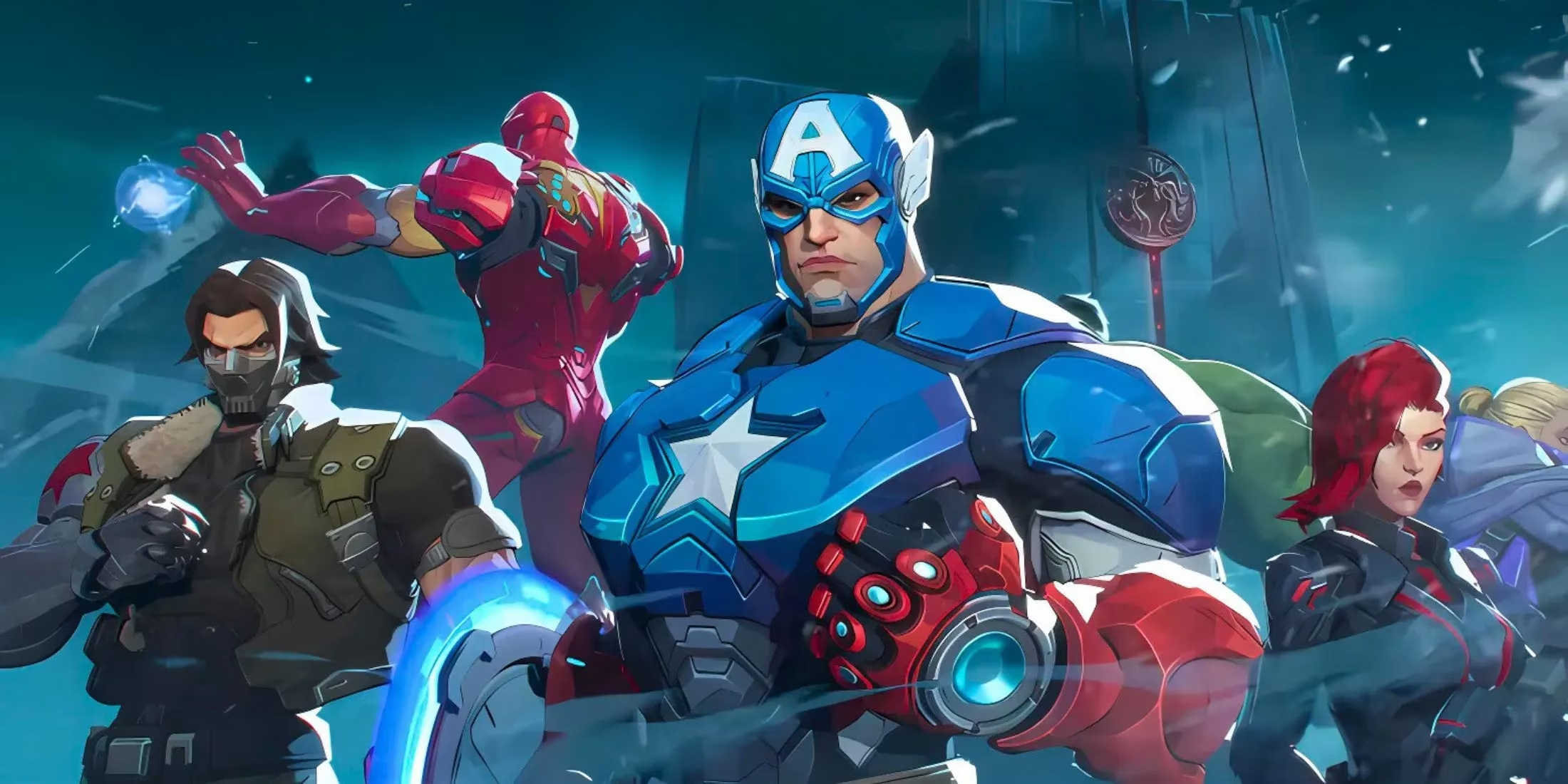
Here’s why I love the design philosophy. Sasser said team-ups were partially meant to keep the meta in flux, claiming that 'a perfect balance is a boring balance.' That’s the kind of statement that makes competitive purists break out in hives, but it’s also a weirdly honest truth. A perfectly balanced hero shooter is like a perfectly symmetrical bowl of oatmeal — nutritious, predictable, and utterly forgettable. Team-ups are the hot sauce that makes you remember why you showed up. They force you to think about team composition as a social puzzle, not just a DPS spreadsheet.
Look at the roster synergies. The Fantastic Four having a unified team-up is basically a love letter to comic-book readers who know that Reed, Sue, Johnny, and Ben are more than colleagues — they’re a family that argues over who left the cosmic cube in the fridge. When Human Torch and The Thing dropped into the game, the second half of Season 1 suddenly felt like a reunion episode where the cool uncles finally show up. I remember watching clips of the Storming Ignition play out and thinking, 'Oh great, now I have to worry about a flaming tornado AND my own terrible aim.' 😬
| Team-Up Ability | Heroes Involved | What It Does (In My Words) |
|---|---|---|
| Storming Ignition | Storm + Human Torch | Summons a massive flaming tornado, aka 'nope, I’m out' weather |
| Fastball Special | Hulk + Wolverine | Hulk yeets Wolverine like a furry, adamantium-laced football |
| Fantastic Four Unified | The Fantastic Four | Team-wide comic-book family synergy that makes solo queue feel lonely |
The layoff news hit me like a side quest that turns out to be the main story. Sasser himself said it was strange to lose his job when the game was clearly a massive success. Some players were quick to point out these weren’t sweeping company-wide layoffs — he led a relatively small team. But that’s the point, isn’t it? A small team of developers can have an outsized impact. It’s like assuming the bass player in a band is replaceable, then wondering why every song suddenly sounds like a ringtone. The people who pitch the wild ideas are often the ones who make a game feel alive, even if they don’t sit in a corner office.
As I write this in 2026, Marvel Rivals has moved well beyond Season 1. Human Torch and The Thing are old news, and the team-up system has only grown more central to how matches play out. But Sasser’s LinkedIn post still sticks with me. It’s a reminder that the games we love are built by people, not just by engagement metrics or quarterly earnings calls. The next time I trigger a Fastball Special or get deleted by a Storming Ignition combo, I’ll pour one out for the small Seattle team that helped make it happen — and then I’ll probably uninstall, reinstall, and queue up for another match because balance is boring, and I am a glutton for flaming tornadoes. 🫡
In the end, team-up abilities didn’t just change Marvel Rivals; they turned the game into a chaotic comic-book potluck where everyone brings one weird dish and hopes for synergy. Sasser may have been shown the door, but his idea is now baked into every match. And honestly? That’s a legacy no optimization spreadsheet can delete.
As reported by VentureBeat GamesBeat, the behind-the-scenes reality of blockbuster success often includes organizational reshuffles that don’t necessarily track with player counts—something that echoes the Marvel Rivals situation where team-up abilities became a defining feature even as key contributors were let go. From an industry lens, mechanics like Storm and Human Torch’s “Storming Ignition” or Hulk and Wolverine’s “Fastball Special” aren’t just flashy combos; they’re retention-friendly systems that encourage social coordination, drive replayability through shifting metas, and create trailer-ready moments that marketing teams can’t buy with balance patches alone.