It’s 2026, and Marvel Rivals just keeps growing. With a library of heroes that could theoretically fuel weekly releases until the year 2900, you’d think a couple of underperformers from last year would be a distant memory by now. Yet, over a year after the fiery Human Torch and the rocky Thing crash-landed into the roster, they remain stubbornly locked near the bottom of the competitive ladder. What gives?
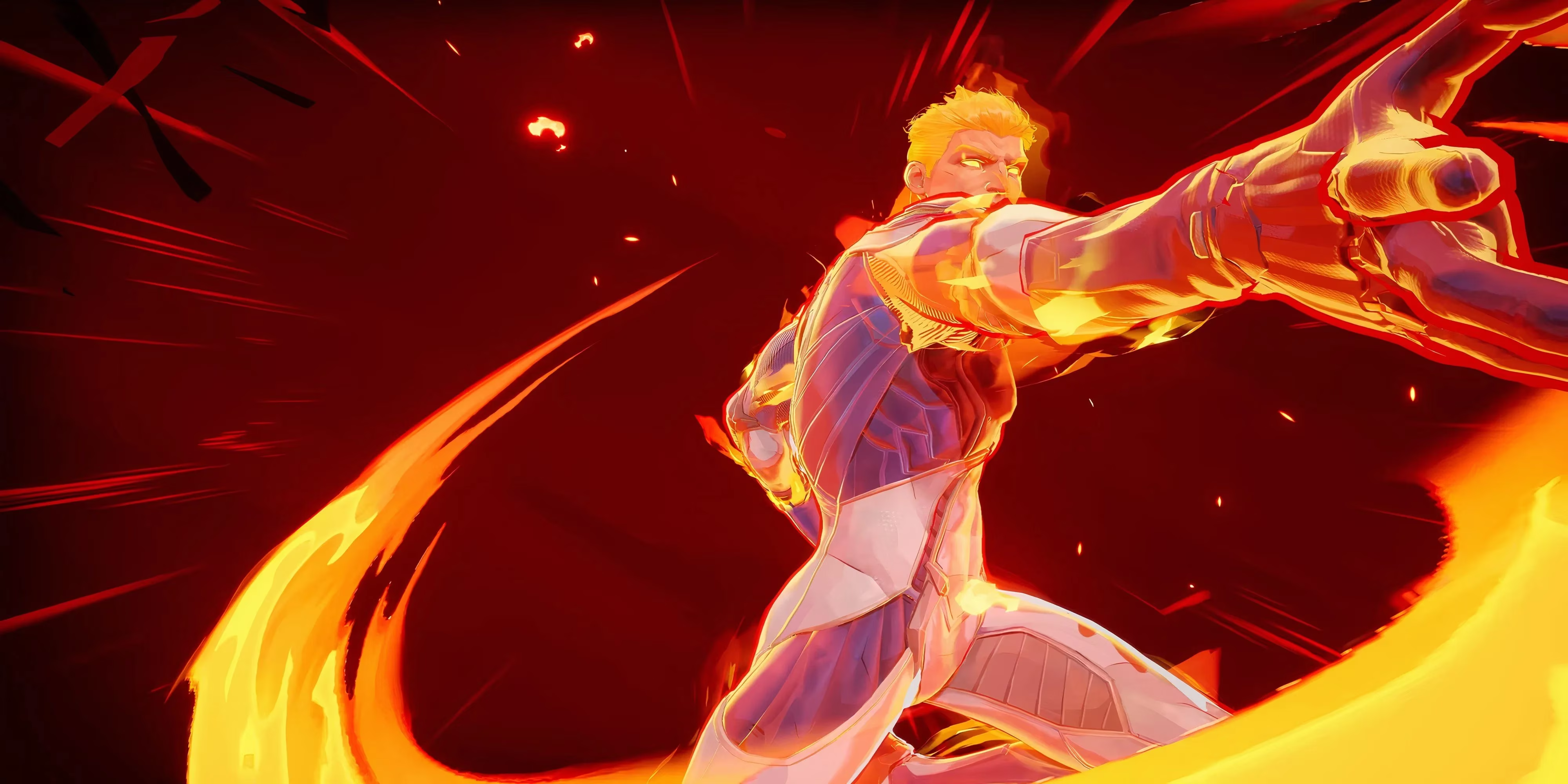
The hype was real when the final members of the Fantastic Four joined the fray in early 2025. Johnny Storm promised to light up the skies, and Ben Grimm arrived to clobber anyone in his path. But fast forward to today, and the data isn’t just lukewarm—it’s a cold shower. According to tracking sites like Rivals Meta, both heroes continue to post win rates that would make any strategist wince.
The Numbers Don’t Lie (But They Do Hurt)
The Thing sits at a 49.11% win rate, which somehow puts him ahead of his teammate Invisible Woman but still firmly in the bottom half of all heroes. For a Vanguard designed to disrupt and absorb, that’s barely a tremor. And then there’s the Human Torch, whose 46.09% win rate places him in the dreaded bottom five, alongside notorious underperformers like Black Widow and Jeff the Land Shark. Ouch.
So, why are these two still floundering? Is it a design problem, or something more obvious?
The Pick Rate Paradox 🔄
Here’s where things get spicy. While their win rates are abysmal, their pick rates were and still are surprisingly high. When they first launched, The Thing had the second-highest pick rate behind Invisible Woman, and Human Torch wasn’t far behind. That trend hasn’t completely died—new players keep grabbing them to test the waters. But when thousands of inexperienced pilots try to thread the needle with a squishy flying Duelist or an immobile tank, you’re going to see a lot of crash landings. The sheer volume of trial-and-error play drags the collective win rate down. It’s a classic example of “popular but not powerful.”
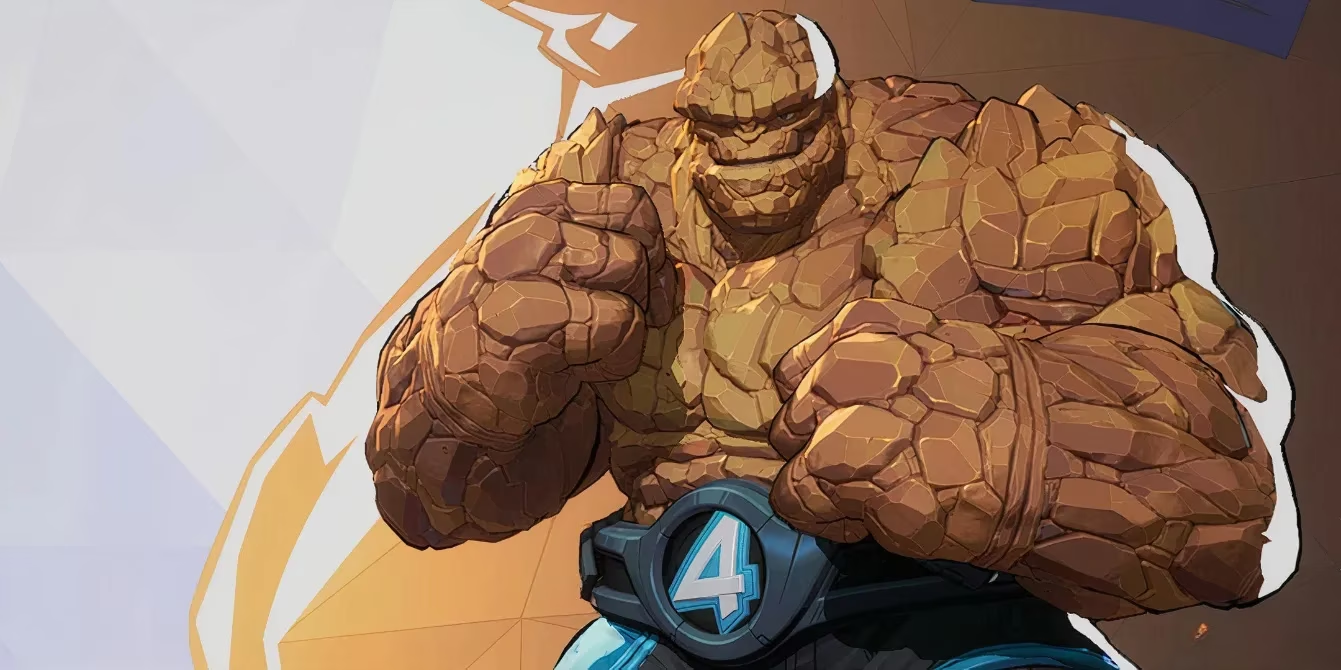
But let’s not put all the blame on the players. The Human Torch’s kit asks a lot: he needs precise positioning to use his aerial flame zones and burst damage, yet a single hitscan hero like Punisher or Hela can swat him out of the sky. Meanwhile, The Thing’s clobberin’ time often ends before it starts when he gets kited by mobile team comps that simply walk away from his short-range slams. Neither hero has received the kind of rework that would let them compete with the top-tier threats dominating the 2026 meta.
Fantastic Four: A Family Affair Gone Wrong? 🤔
It’s hard to ignore the bigger picture. The entire Fantastic Four rollout felt a bit undercooked. Invisible Woman has struggled to find a consistent niche outside of niche shield comps, and only Mister Fantastic occasionally pops up as a sleeper pick (thanks to his elastic, disruptive playstyle). The developers clearly wanted team-up synergies, but on ladder, solo queue reigned supreme, and Ben and Johnny just couldn’t carry their weight without a coordinated squad.
Ask any veteran player: when was the last time you feared a Human Torch ult? Exactly. The “Flame On” sounds cool, but it often signals a free kill rather than a team wipe.
Looking Forward: Who’s Next? 🔮
With the Fantastic Four now old news, the community’s eyes are fixed on the horizon. Leaks—because Marvel Rivals fans love a good datamine—point to Gambit and four X-Men joining the roster soon, possibly alongside Blade and Ultron. Each name sparks its own wave of excitement. But after the Fantastic Four’s rocky debut, you can’t help but wonder: will NetEase learn from the lukewarm reception?
Balancing high-mobility, high-damage characters like Gambit or an deadly assassin like Blade is no easy task. The same meta that chews up Human Torch could easily devour a squishy mutant with a staff. And Ultron? A flying villain with drones sounds either meta-defining or utterly underwhelming, with very little middle ground.
Can the Torch Still Burn Bright? 🕯️
It’s not all doom and gloom. Heroes in Marvel Rivals do receive balance passes, and a simple numbers tweak or a new team-up ability could rocket Johnny and Ben back into relevance. But until that happens, they’ll remain cautionary tales—a testament to the fact that even the most iconic superheroes can fail to light up the scoreboard. With 875 years of content ahead, there’s plenty of time for redemption, but who wants to wait that long?
This assessment draws from SteamDB to contextualize why popularity can coexist with poor outcomes: when overall activity surges after content drops or sales events, the influx of first-time pilots tends to amplify “pick-rate drag,” especially for execution-heavy kits like Human Torch’s aerial zoning or The Thing’s close-range engage. In practice, that means their low win rates can persist even without major nerfs—because the player pool repeatedly refreshes with newcomers testing iconic heroes, while the meta continues to reward safer hitscan pressure and high-mobility comps that punish predictable flight paths and kite short-range Vanguards.