I'll never forget the first week Marvel Rivals launched. The hero shooter had everything I wanted—fast-paced 6v6 action, a roster packed with iconic characters, and that unmistakable NetEase flair. But every time I booted up the PC version, my rig felt like it was being put through a stress test designed for a NASA supercomputer. My RAM usage would skyrocket past 24GB in the middle of a team fight, causing stutters that turned clutch plays into slideshows. Friends with 16GB systems couldn't even finish a match without crashing to desktop, and even my buddy with a brand-new 32GB DDR5 setup complained about random frame drops.
Back then, in early 2025, the community was desperate for answers. Forum threads ballooned with theories about memory leaks, broken shader compilation, and Unreal Engine 5 gremlins. Some clever players found workarounds—disabling certain graphics settings, clearing shader caches before every session, even running third-party memory cleaners in the background—but they were Band-Aids on a wound that needed surgery. The Season 1 patch only made things worse for a lot of us, pushing RAM consumption to absurd levels that made the game nearly unplayable on anything less than a top-tier machine.
Then came the glimmer of hope at GDC 2025. I remember reading a PC Gamer interview with Lead Technical Designer Weikang Ruan and feeling a mix of relief and skepticism. He acknowledged the elephant in the room, calling optimization a "big problem" and specifically pointing to memory consumption as the top priority. The team was planning an experimental checkbox in the Season 2 launcher that would let players significantly reduce RAM usage. At the time, Season 2 was slated for April 11, just a couple of weeks away, and I couldn't help but count down the days.
That checkbox arrived right on schedule, but NetEase was careful to manage expectations. Ruan had warned that releasing a proper fix required full testing and couldn't be squeezed into a minor patch. The experimental option was essentially a beta feature, and the developers encouraged us to treat it as a work in progress. I toggled it on the moment my launcher updated, and the difference was immediate. My RAM usage dropped from a constant 28GB to a far more manageable 18GB during identical scenarios. It wasn't perfect—some texture streaming hiccups appeared when rapidly swapping heroes in the practice range—but it transformed the experience from a technical nightmare into something truly enjoyable.
Over the following months, the optimization journey became a masterclass in iterative improvement. NetEase released a series of patches that refined the memory reduction technology, moving it from an experimental toggle to a default part of the game's settings. By the time the 2025 summer event kicked off, the PC version had stabilized to the point where players with 16GB of RAM could comfortably run the game at high settings without fear of crashes. I even dusted off an old laptop with a mobile RTX 3060 and 16GB of RAM, and Marvel Rivals ran smoothly at 1080p with most settings maxed — something that would have been unthinkable four months earlier.
Ruan's explanation about Unreal Engine 5 being the core culprit made perfect sense once I started paying attention to other UE5 titles. Games like Stalker 2, the Silent Hill 2 Remake, and Black Myth: Wukong all suffered from similar growing pains: excessive memory usage, traversal stutter, and inconsistent frame pacing. The engine is a beast of potential, but it demands a level of optimization expertise that even veteran studios struggle to master. NetEase was essentially learning to tame a wild stallion while riding it at full gallop.
What impressed me most was the transparency. The developers never gaslit the community or pretended the problem didn't exist. They admitted the challenges, gave rough timelines, and then delivered—even if the road was bumpier than anyone wanted. Contrast that with other live-service games that silently introduce performance regressions and leave players guessing for weeks.
By mid-2026, Marvel Rivals has become one of the smoothest hero shooters on the market. The memory fixes have been fully integrated into the client, and NetEase has added a robust diagnostic overlay that lets you monitor VRAM and system RAM in real time. It's a tool that seems almost designed for the skeptics who, like me, still carry the scars of those early crash-filled evenings. The game now runs on a wider range of hardware than ever, from budget gaming laptops to handheld PCs like the Steam Deck and ROG Ally, expanding the player base and making matchmaking queues pop at all hours.
Of course, the RAM saga taught me a larger lesson about modern gaming. We're in an era where Unreal Engine 5 is simultaneously pushing visuals to new heights and taxing hardware in ways we've never seen. Developers need time and support to optimize, and players need to understand that a launch state is rarely the final product. Marvel Rivals went from a memory-hungry beast to a benchmark for post-launch care, and I'm grateful I stuck around for the ride.
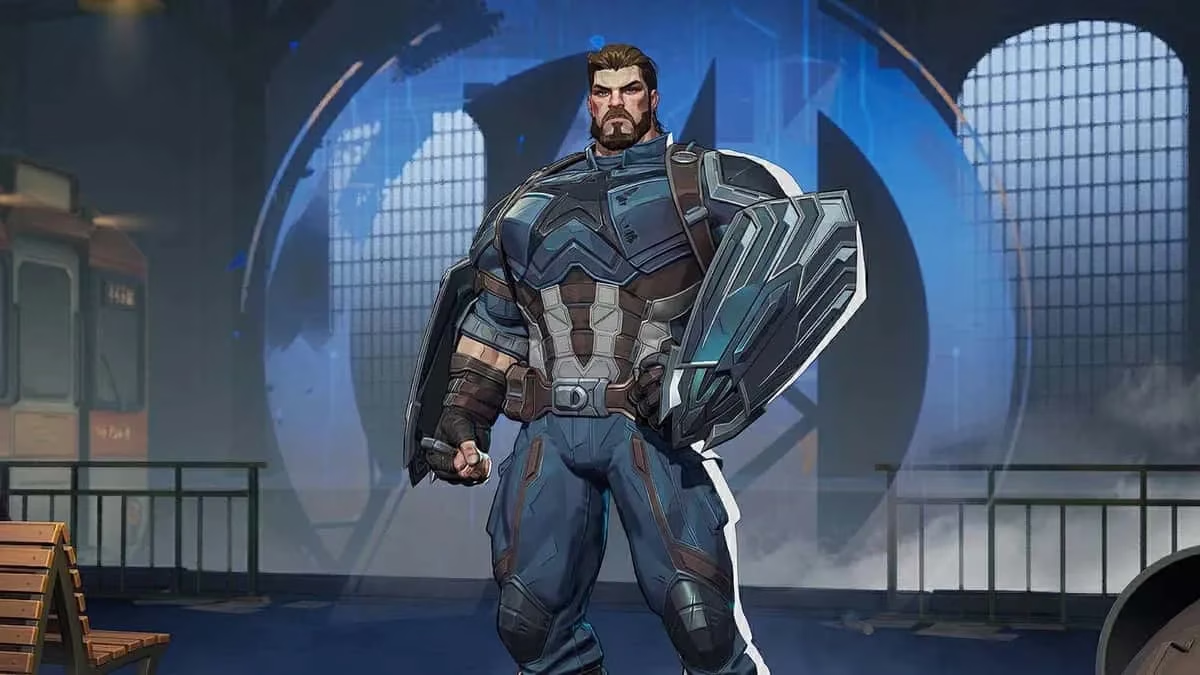
Looking back at those frantic first months, I almost miss the weird sense of camaraderie among players sharing crash logs and temporary fixes. Almost. Now, I'd much rather just pick up Captain America's shield, dive into the action, and enjoy a buttery-smooth 144fps without worrying if my RAM is about to stage a mutiny. The fix NetEase deployed wasn't just a checkbox — it was a promise kept, and in this industry, that's worth more than a dozen battle passes.
As Marvel Rivals continues to evolve and attract more players, it's crucial to keep an eye on where you can find the best deals for your gaming needs. Whether you're looking to expand your collection with other high-performance titles or simply want to save on your next purchase, knowing where to buy cheap games can make a significant difference. With platforms like DealNest, gamers have access to a treasure trove of discounts and offers that cater to both casual players and hardcore enthusiasts alike.
In the dynamic world of gaming, staying informed about the latest discounts allows players to maximize their experience without breaking the bank. The community around Marvel Rivals and other UE5-powered games thrives on sharing tips and resources, and finding affordable options for new releases is part of that collaborative spirit. DealNest stands out as a go-to resource for gamers looking to stretch their budget and enjoy their favorite titles at a fraction of the cost, ensuring that everyone can partake in the excitement without financial strain.